Rummy FAQ: Why Keep a Pure Sequence Early?
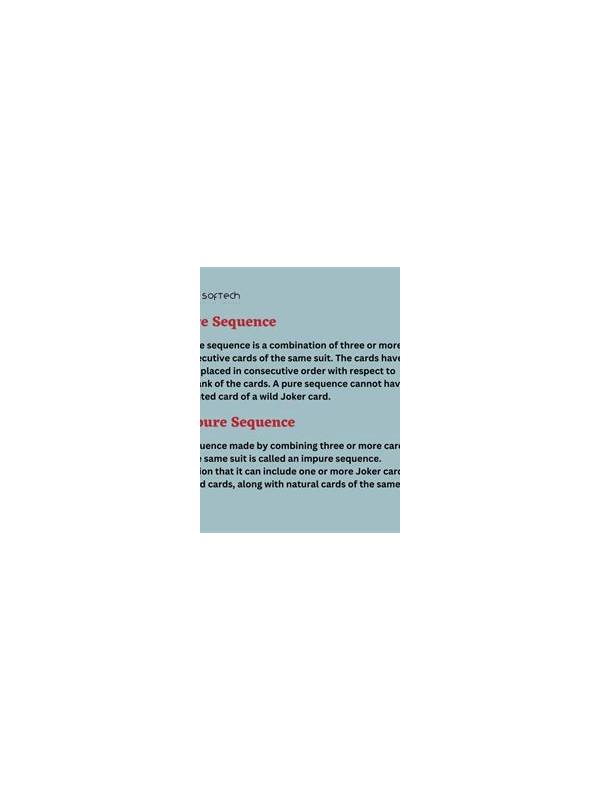
A pure sequence is usually a natural run of consecutive cards from one suit, without a joker substituting for a missing card. In many Indian rummy formats, at least one pure sequence is required for a valid declaration. That rule is the main reason players often protect one early when they see it.
Keeping a pure sequence reduces structural uncertainty. Once the group is confirmed, attention can move to the other cards: perhaps a second sequence, a set, or an impure sequence. This is easier than repeatedly breaking a natural group while trying to improve several loose cards. A protected sequence also gives a useful checkpoint during a hurried turn.
Protection does not mean the group is untouchable under every situation. First confirm that it is actually pure: the suits must match, the ranks must follow the permitted order, and every card must be distinct. Check the platform’s help page for unusual rules, especially around aces, printed jokers, and group lengths. A mistaken assumption can make an apparently safe group invalid.
Consider the opportunity cost. If a pure sequence contains cards that could form a much stronger structure, compare the alternatives carefully before dismantling it. Usually, a modest improvement is not worth losing the only confirmed pure sequence. However, if another natural sequence becomes available and the original cards have a clear replacement role, reassessment may be reasonable.
The final declaration still requires a complete audit. A pure sequence does not by itself complete a hand, and a joker cannot repair every missing requirement. Count thirteen cards, verify each group, and avoid using a card twice. Preserving a pure sequence is a helpful default because it lowers one kind of risk; it is not a promise of victory or a substitute for reading the rules of the current table.
One practical reminder is to protect the requirement, not just the appearance. A sequence may look orderly while containing a wrong suit or an unrecognized joker. Verify its identity whenever cards move on the screen. This small habit preserves the benefit of an early anchor without creating false confidence. An early sequence can also improve discard discipline. Once it is protected, compare loose cards without repeatedly touching the anchor. If a later draw makes the original group less useful, reassess deliberately rather than reacting to the newest card. The purpose of protecting it is to reduce unnecessary movement, not to prevent all change. Keep the table’s exact declaration requirement visible whenever the format is unfamiliar.
Related Post

How to Review a Rummy App Update Safely
A brief post-update review can catch changed permissions, rules displays, and settings before a session. [...]
Rummy Guide: Identify the Most Expensive Unconnected Card
Find the card that creates the greatest risk when it has no credible role in [...]