How to Read a Rummy Discard Trail Without Guessing
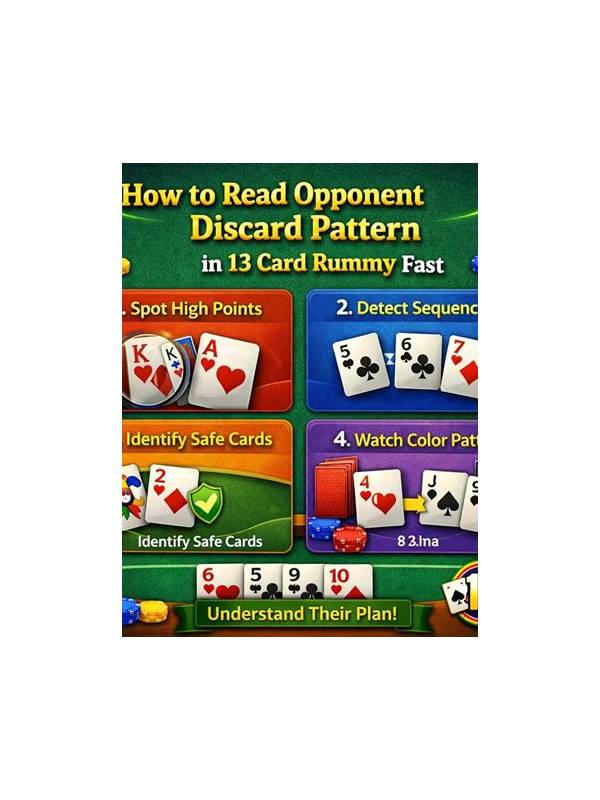
The discard pile is a record of decisions, but it is not a perfect window into another player’s hand. A card may be thrown because it is useless, because it was dangerous to keep, or simply because a better option appeared. Reading the trail well means collecting clues without turning one clue into a certainty.
Begin with the most recent discards. A recent card is more likely to reflect a current plan than one released several turns ago. Notice whether a player repeatedly discards cards from the same suit or rank area. Several connected cards leaving together can suggest that a sequence was abandoned, while isolated high cards may indicate an effort to reduce penalty points. Treat both as possibilities, not proof.
Next, compare the discard with the cards that remain visible. If a player takes a card from the discard pile and later releases a nearby card, that action gives more information than a random discard. It may show that the original card completed a useful group or that the player is testing a new arrangement. Still, a player can also take a card defensively to deny it to someone else, depending on the rules and table habits.
Use the trail to guide your own discards. If an opponent has shown interest in a particular suit, avoid casually offering a card that connects with the visible pattern. You do not need to freeze every related card; keeping a high-value card only to deny it can leave your own hand weak. Ask whether the defensive benefit is worth the opportunity cost.
Keep a simple three-column mental note: cards taken, cards discarded, and cards that remain plausible. The first column is usually the strongest clue. The second is useful when several moves point in the same direction. The third prevents overconfidence, because many unseen cards can still fit the opponent’s plan. If you play on a small screen, group the information by suit instead of memorizing every card.
Do not read your opponent’s discard trail in isolation. Check your own hand and the remaining deck. A card you need may be safe to hold even if it looks attractive to another player, while a card you do not need can be released when the chance of helping someone is low. Also consider turn order: a discard that is safe against one opponent may be immediately useful to the next.
Finally, review the trail after the hand. Identify one prediction that helped and one assumption that failed. This turns observation into a repeatable skill. Good discard reading is not mind reading; it is disciplined use of incomplete information, balanced against the need to build a valid hand of your own.
Related Post
Rummy FAQ: Should You Keep Two Incomplete Runs?
Keeping two incomplete runs can be sensible briefly, but only when their improvement paths are [...]
Rummy Safety: Verify Rules Before Playing a New Format
Confirming format rules, scoring, and settlement details prevents avoidable mistakes in unfamiliar rummy games. [...]