Rummy How-To: Read an Opponent’s Discard Pattern Carefully
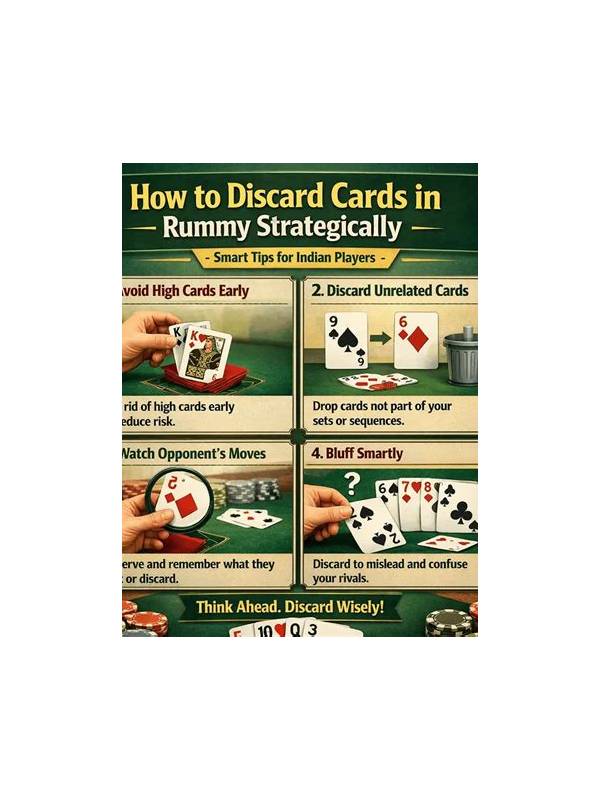
The discard pile offers information, but it does not provide a complete view of another player’s hand. A player may discard a card because it is useless, because it hides a plan, or because the move was made under time pressure. The goal is to notice patterns while keeping your conclusions modest.
Begin with repeated evidence. One discarded card is a weak clue. Several cards from the same suit, rank area, or sequence neighborhood are more informative. If a player repeatedly releases high cards, they may be reducing points or may already have a different structure. Either way, the pattern is worth recording mentally, but it is not proof of a specific hand.
Watch what is taken as well as what is discarded. A player who takes from the discard pile reveals that the visible card fit an immediate need. The surrounding cards may still be irrelevant to them. Avoid assuming that taking one seven means they need every six, eight, or seven available.
Use the information to improve your own discards. When two candidate cards are similar for your hand, consider which one is less likely to help an opponent based on the table history. This is a secondary tiebreaker. Never throw away a structurally important card merely to make a speculative defensive play.
Refresh your reading after every meaningful change. A declaration attempt, a new sequence, or several turns can make an earlier pattern obsolete. Players adapt, and the same person who discarded high cards early may later hold one because it became connected. Treat observations as time-sensitive.
Keep a confidence scale. You might regard a single clue as low confidence, a repeated pattern as medium confidence, and a visible pickup plus matching discards as higher confidence. Even high confidence is not certainty. This habit prevents dramatic guesses from controlling your whole hand.
Reading discards is therefore an exercise in probability and restraint. Look for repeated behavior, connect it to the current table, and use it only when your own hand remains sound. Good observation supports decisions; it does not replace them. Avoid announcing your interpretation to the table or changing your entire hand because of one clue. Quiet observation is more reliable than dramatic reaction. When the pattern is ambiguous, choose the action that improves your own structure and let later turns provide better evidence.
Related Post

Rummy Comparison: Casual Notes Versus Formal Hand Logs
The right record-keeping style depends on whether you want a quick reminder or a detailed [...]
Rummy Guide: Use a Commitment Point to Simplify Discards
A planned commitment point helps you stop protecting every possibility and choose cleaner discards as [...]