Rummy Comparison: Natural Groups and Joker-Assisted Groups

Natural groups use cards in their ordinary identities, while joker-assisted groups use a wild card to fill a missing role. Both can be useful, but they carry different kinds of flexibility and risk. The exact declaration rules always come first.
A natural sequence is usually strong because every card has a fixed, verifiable place. It does not depend on preserving a joker, and its meaning is easy to check before declaring. A joker-assisted sequence may be completed sooner, but it also consumes a flexible resource that could repair a more difficult group later.
Compare the missing-card problem. If a natural group is missing one card and several plausible copies remain, holding its natural pieces may be reasonable. If the missing card is narrow or exposed, a joker can make the group practical. Avoid treating the joker as free: using it in an easy group may leave another pair or sequence impossible to finish.
Also compare point and structure. A joker may reduce the penalty of an awkward high card, but the resulting group still needs to satisfy the table’s requirements. Re-sort the hand after using a joker. A group that looked complete may still leave too many ungrouped cards elsewhere.
During practice, deal hands with one joker and test two plans: reserve it for the hardest group, then use it in the easiest group. Note which plan leaves more options after the next draw. The exercise shows why “use the joker immediately” and “always save the joker” are both incomplete rules.
Choose the plan that fits the current hand, rules, and limits. Do not chase a better outcome by increasing stakes or extending a session. A joker is a flexible card, not a promise that a declaration will succeed. The comparison changes in the endgame. A joker that preserves a second route may be more valuable than one that merely lowers a few points, while a natural group that is already secure should not be disturbed for a marginal improvement. Before declaring, inspect every group independently and confirm that the joker’s assumed identity is allowed. Do not let a visual arrangement substitute for the rules. In practice, write two versions of the hand: one using the joker in the hardest group and one leaving it available. The version with fewer unresolved requirements is usually easier to verify, even when neither outcome is guaranteed. The same comparison applies to sets: a natural set may be easy to verify, while a joker-assisted set can preserve a difficult sequence elsewhere. Always check the group as a whole, not only the card that seems to solve it.
Related Post
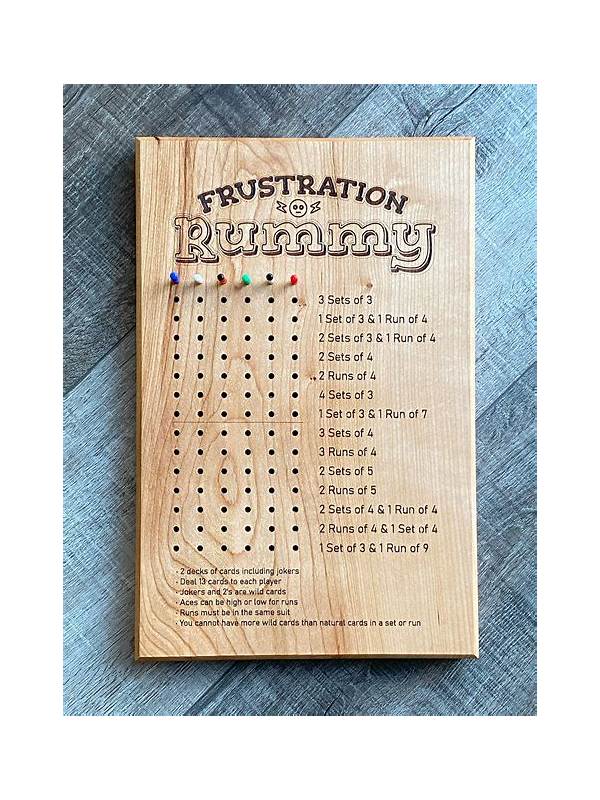
Rummy How-To: Test a Plan With a Neutral Draw
Imagining a neutral draw shows whether a rummy plan has resilience or depends on constant [...]
Rummy Turn Checklist: Draw, Recheck, Discard
A three-stage turn routine keeps rummy decisions consistent when the table moves quickly. [...]