Rummy Table Review: Three Metrics Beyond Wins
Wins are satisfying, but they are a noisy way to judge improvement in a game that includes uncertain draws and changing opponents. A short table review can reveal whether your decisions are becoming stronger even during a losing session. Use three measures: hand clarity, discard discipline, and recovery quality.
Hand clarity asks whether you could explain your plan before making a discard. The plan does not need to be perfect. It might be to complete a pure sequence, reduce a high-value isolated card, or preserve two possible connectors for one more turn. If you often discard without being able to name your current priority, the issue may be organization rather than luck. After each hand, give yourself a simple rating from one to three: unclear, partly clear, or clear.
Discard discipline measures whether your discards matched your stated plan. A player may decide to reduce risk, then keep an expensive isolated card because a new combination looks exciting. That is not automatically wrong, but it is worth noticing. Review two or three key discards and ask what information was available at the time. Judge the decision using the earlier evidence, not the result that appeared later.
Recovery quality concerns what happened after a poor draw or a mistake. Strong play is not limited to perfect openings. When a plan fails, did you simplify the hand, reduce exposure, and create a new route? Or did you keep defending the original idea? A good recovery can turn an awkward hand into a manageable one, even if it does not produce a win.
Keep the review brief. Record one example for each metric and one adjustment for the next session. For instance, you might note that your plan was clear, your discard discipline weakened after a tempting draw, and your recovery improved once you stopped protecting a weak pair. This is more useful than writing a long emotional account of the final score.
Do not compare these measures with another player’s private information or use them to criticize yourself after every unlucky outcome. Their purpose is learning. Over time, repeated reviews can show patterns: perhaps your openings are organized but your endgame decisions rush, or perhaps you recover well but hold high cards too long. Those patterns provide practical targets that a win-loss record cannot show.
Related Post
Indian Rummy Guide: Protect Information While Sorting Cards
Learn how thoughtful card organization can improve review without making every plan obvious to you [...]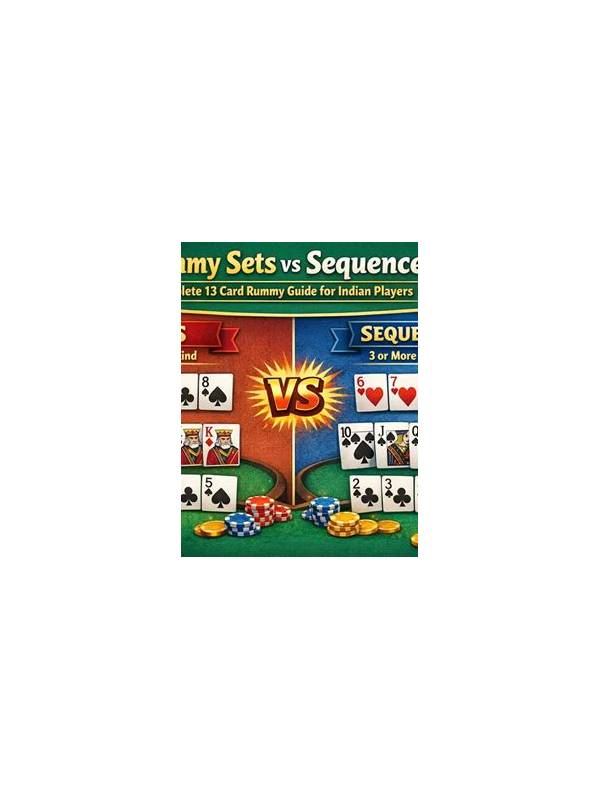
Rummy Sets Versus Sequences: A Decision Guide for Beginners
Compare sets and sequences by their role in a valid hand, not by which group [...]