Rummy Hand Triage When Several Cards Need Help
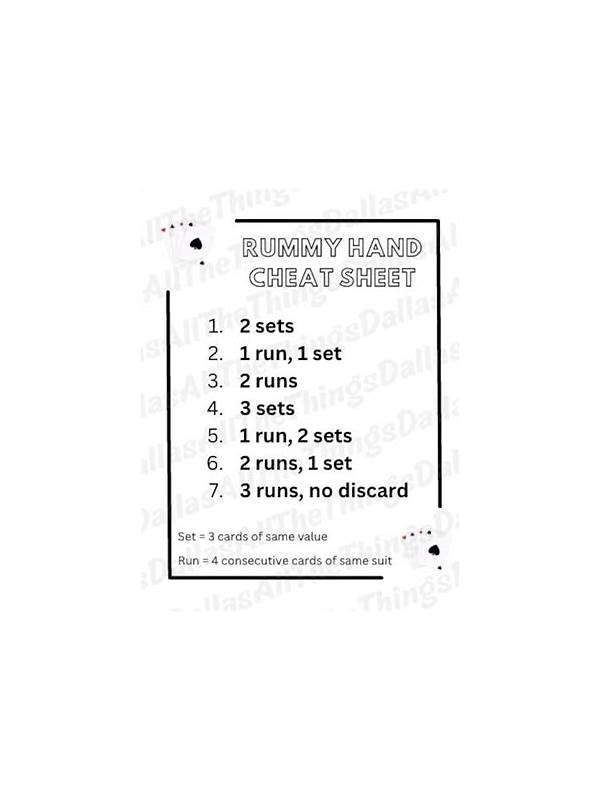
Some opening hands look difficult because every loose card appears to need work. The usual mistake is to treat all problems as equally urgent. Hand triage offers a better approach: identify the most promising repair, protect what is already sound, and postpone ideas that have little support.
Start by separating stable groups from uncertain ones. A natural sequence or a complete set gives you structure, even if the variant has additional requirements. Mark it mentally as stable, then inspect the remaining cards. For each unfinished group, record how many exact cards could improve it and whether those cards are likely to be useful in more than one arrangement. A pair with two open ends is generally more flexible than a single card that needs a narrow rank.
Use a three-level priority. First come repairs that complete a required structure with one plausible draw. Second are flexible connections that improve two or more possible arrangements. Third are attractive but isolated ideas. This ranking avoids spending several turns on a card simply because its neighboring ranks look familiar. A plan should earn its place by offering a credible route, not by being imaginable.
Point exposure matters during triage. If two plans are similarly flexible, prefer the one that lets you release a costly unconnected card sooner. This is not a rule to discard every high card immediately. A high card that sits in a strong sequence may be safer than a low card that has no route. Think in terms of replacement difficulty and future use, not rank alone.
The discard pile can refine the priorities, but it should not dictate them. A visible card may confirm that one route has become less likely, while a recent discard may reveal that another player is interested in a suit. Treat such information as evidence with limits. It does not tell you every unseen card or guarantee that a player will continue the same plan.
Reassess after each draw. A new card can turn a third-level idea into a first-level repair, or it can make an old pair less valuable by completing a better arrangement elsewhere. If no plan improves, choose the discard that reduces the most risk while preserving at least one flexible route. Triage is successful when the hand becomes easier to explain: one stable base, one main repair, and a small number of cards waiting for evidence.
Related Post

Rummy How-To: Create a Two-Minute Pre-Game Checklist
A short checklist can reduce avoidable mistakes before a rummy session begins. [...]
Rummy Guide: Read the Table Without Guessing Personalities
Focus on observable actions at the table instead of turning limited game information into assumptions [...]