Rummy FAQ: How Do You Recognize a Weak Pair?
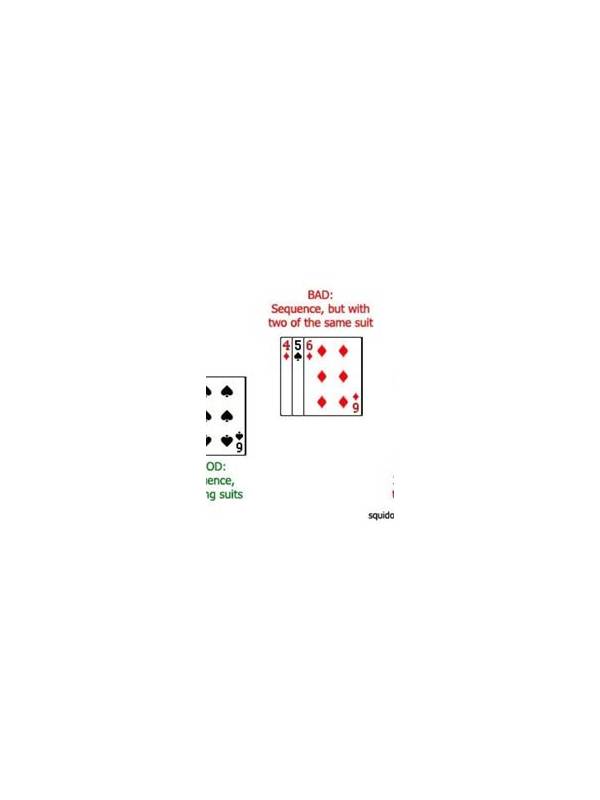
A pair is not automatically a promising foundation. Its usefulness depends on the cards that can join it, the other groups in your hand, and the time available. A weak pair is one that looks tidy but has few realistic ways to become part of a valid arrangement.
Check the pair’s neighborhood first. Two adjacent cards in the same suit can accept a card on either side, while a separated pair may depend on one exact value or on a set with matching ranks. A pair with several possible connectors is more flexible than one with only a single missing card. Still, flexibility should be measured, not assumed: connectors already visible in the discard pile may reduce its practical value.
Next, look at the rest of your hand. If you already have a strong sequence and a likely set, the pair may be a useful reserve. If you have three or four incomplete pairs, keeping all of them creates congestion. Choose the pair with the best combination of connectors and discard safety, then give the others a deadline.
A useful deadline is one or two meaningful draws, depending on the game format. During that window, watch whether the pair gains a second connection or competes with a stronger structure. If nothing changes, release it without regret. The goal is not to prove that the pair was bad; it is to avoid paying repeated turns for a low-probability idea.
Also ask whether the pair is expensive to hold. High cards can create a larger penalty if the hand ends before they are organized. A low pair may be less urgent, but it can still be weak if it blocks a better route. Evaluate structure, timing, and cost together. That turns a vague feeling about a pair into a repeatable decision. The pair can also be weak because it interferes with a better card. Suppose one card in the pair is the only bridge between two promising sequences. Keeping the pair as a unit may be less valuable than separating it and using that bridge elsewhere. Ask what the pair prevents you from doing, not only what it might become.
When you release a weak pair, discard the card with the narrowest future role if the point values are similar. If one card is safer to pass because it is unlikely to help an opponent, that can break the tie. These small comparisons turn patience into a controlled experiment rather than a habit.
Related Post
How to Review a Rummy Hand After Every Discard
A brief post-discard review keeps your plan current when a new card changes the shape [...]
Rummy Table Selection: Match Format to Your Attention
Choosing a table by pace, format, and personal attention helps keep an online rummy session [...]