A Beginner’s Guide to Reading the Rummy Discard Area
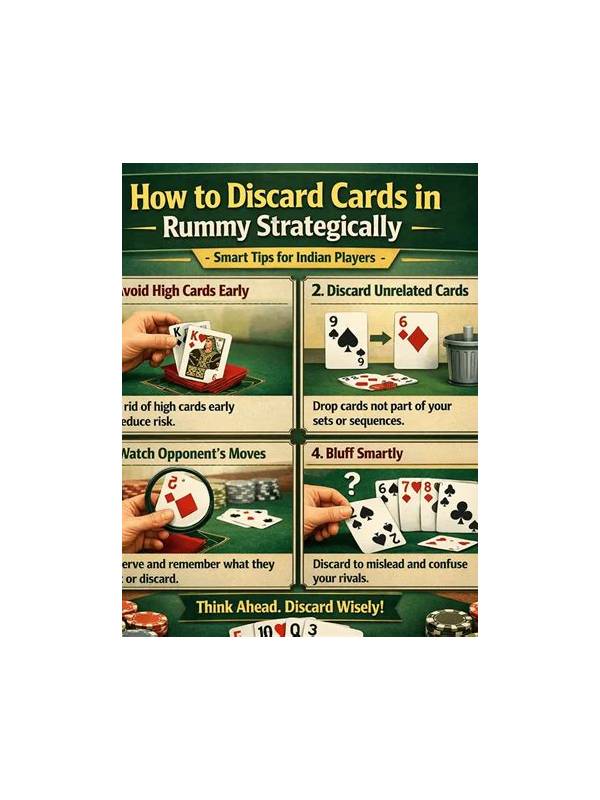
The discard area is a useful source of information, but beginners often read too much into it. You do not need to reconstruct every opponent’s hand. A short, consistent scan is enough to notice cards that are becoming safer, cards that may be wanted, and cards that no longer deserve your attention.
Begin with the most recent discard. It tells you what a player chose not to keep at that moment, but it does not reveal why. They may have had a stronger alternative, needed to reduce points, or simply followed a different plan. Treat the card as a clue rather than a message. Before drawing from the discard area, ask whether it improves a confirmed group or only supports a speculative idea.
Then scan for connected ranks and suits. If several nearby cards of one suit have appeared, a particular sequence route may be less attractive because fewer copies remain visible. This is not a precise probability calculation; it is a reminder to widen your plan. You can also notice repeated ranks. If one rank appears often, a set route involving that rank may deserve less confidence than a route with more unseen support.
Separate information into three notes: unavailable, possibly wanted, and neutral. Unavailable means cards you can see in your own hand or in public discards, though other copies may remain. Possibly wanted means a card an opponent has taken or has protected indirectly through their choices. Neutral means a card for which you have no meaningful evidence. This simple classification prevents one dramatic discard from dominating your thinking.
Use the area to protect your own discards. Before releasing a card, check whether it is adjacent to cards you have seen another player collect. If so, compare it with a different candidate. You do not have to avoid every potentially useful card; doing so can make your own hand too rigid. The goal is to avoid giving away an obvious improvement when your alternatives are similar.
Finally, reset your reading after a new round or a new hand. Old information loses value when the cards and plans change. A common mistake is carrying a suspicion from one hand into the next and treating it as fact. Keep your scan current, brief, and connected to your own decision. The discard area cannot eliminate uncertainty, but it can make your choices more deliberate when you use it as evidence rather than as a prediction machine.
Related Post
Rummy FAQ: Why Does Hand Shape Matter More Than Card Count?
Understand why two hands with the same number of cards can have very different prospects. [...]
Rummy Card Connectivity: A Quick Way to Rank Loose Cards
Ranking loose cards by their realistic connections can make rummy discards more deliberate. [...]