Rummy Strategy: Rank Cards by Completion Distance
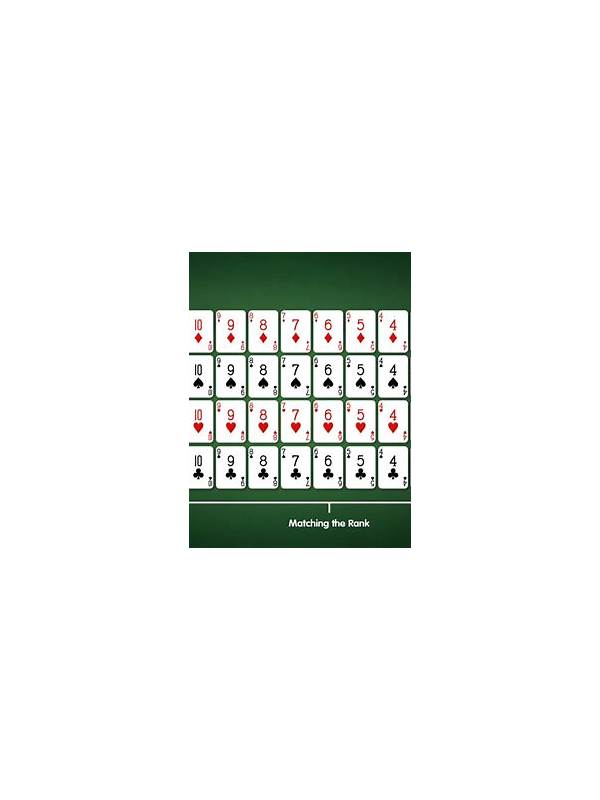
Completion distance is a simple planning idea: how much work remains before a group becomes valid? It does not predict the next draw, but it helps you compare a nearly complete group with a more ambitious pattern that only looks attractive because it contains connected cards.
To use the method, list each possible group and count the missing pieces. A pair that needs one matching rank may be one step from a set. Two consecutive cards may need one neighboring card for a short sequence. A scattered collection may need several changes and should usually be treated as a loose idea, even if the cards share a suit.
Distance alone is not enough. Add a route count: how many reasonable cards could reduce the distance? A group one step away from completion with one exact out may be less practical than a group two steps away with many useful improvements. Also consider whether the needed cards are still plausible given visible information and your remaining turns.
Now add a penalty check. A high card that belongs to a narrow, distant plan may be expensive to keep. A low card may be safer to hold briefly if it connects to several routes. The best priority often balances distance, route breadth, and the cost of waiting. You can use a quick three-part label: near and broad, near and narrow, or distant and uncertain.
Review the ranking after every draw. A new card can reduce one group’s distance while making another group irrelevant. Do not keep an old ranking simply because it was your opening assessment. If a group remains distant across several turns, set a deadline or release it to protect flexibility.
Completion distance is also useful in the endgame. When a declaration is close, favor groups that satisfy the actual requirements and avoid unnecessary extensions. A longer group may be pleasing, but if it increases dependence on a particular card, it can be a worse choice than a shorter secure arrangement.
For practice, take random hands and rank the groups before looking at later cards. Write one sentence explaining the top priority. Afterward, review whether your ranking used realistic routes or inflated every theoretical possibility. The exercise trains prioritization without requiring a perfect prediction. It turns a crowded hand into a sequence of manageable comparisons.
Always confirm the actual variant before applying the ranking, since valid group definitions and scoring details may differ.
Related Post
Rummy How-To: Use a Reset Point During a Long Session
A planned reset point helps you clear stale assumptions and make the next hand with [...]
Rummy Guide: Rank Plans by Number of Unresolved Tasks
Counting unresolved tasks offers a practical way to compare rummy hand shapes beyond simple group [...]