Rummy Guide: Evaluate a Discard by Your Next Two Turns
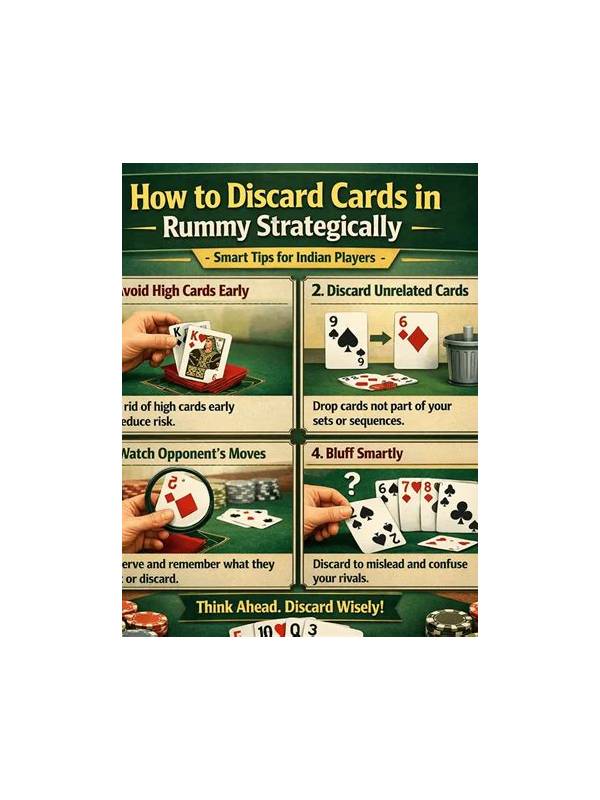
A discard decision becomes clearer when you examine the next two turns rather than trying to predict the entire hand. This short horizon balances immediate structure with future flexibility. It is especially useful when two candidates appear almost equally weak.
For each candidate, ask what your hand would look like after releasing it. Would one valid group remain protected? Would the discard free a space for a more useful draw? Would it reveal that you have abandoned a plan? These questions describe the immediate effect without requiring certainty about the deck.
Then imagine two ordinary outcomes for the next draw: an improvement and a neutral card. A good discard should leave you with a reasonable response in both cases. If one discard makes the improvement outcome excellent but the neutral outcome disastrous, it is a concentrated bet. That may be acceptable late in a hand, but it should be recognized as risk rather than mistaken for a balanced plan.
Compare the second turn as a consistency check. Could you reassess after the next draw, or would the discard lock you into a narrow arrangement? Prefer the option that keeps a genuine alternative alive when the difference in current value is small. Flexibility is not a promise of success; it is room to adapt.
Do not let the horizon become an excuse to keep every card. If a high penalty card has no connection, the immediate cost may dominate. The method is a comparison tool, not a reason to postpone necessary cleanup. Likewise, avoid treating an opponent’s possible response as certain. Public discards offer clues, not complete information.
With practice, the two-turn horizon becomes a quick mental routine: current shape, improvement outcome, neutral outcome, and reassessment point. It helps you select a discard that works in more than one plausible future while keeping the decision grounded in the cards you actually hold. After the two turns, compare the imagined outcomes with what happened. This is not a contest to prove that your prediction was right. Instead, ask whether the discard preserved the ability to adapt. If it did, the method worked even when the cards were unkind. If it did not, identify which assumption was too strong and adjust the next comparison. This short review can be done with paper, a private note, or the platform’s permitted history. Avoid collecting information that identifies other players unnecessarily. The useful record is the shape of your options and the reason for your discard. Over time, the two-turn method should make your choices clearer even when the hand remains uncertain.
Related Post
Rummy FAQ: Can You Learn Without Playing for Money?
Free practice, physical cards, and structured review can teach core rummy skills without financial pressure. [...]
Rummy Comparison: Fixed Rules or Flexible House Rules?
Fixed rules improve consistency, while house rules can add variety if every player understands them [...]