Rummy FAQ: Why Can Two Legal Hands Have Different Risk?
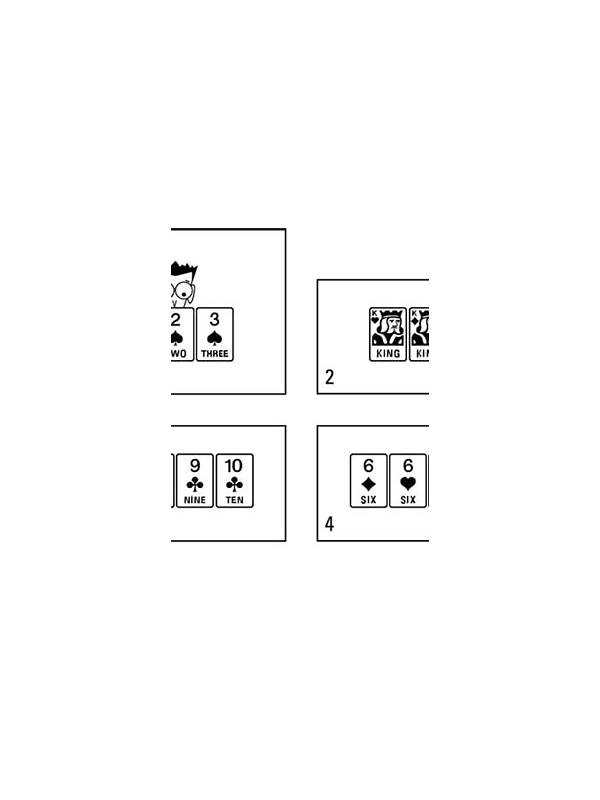
Two arrangements can both be legal and still carry very different levels of risk. Legality answers whether a declaration is allowed. Risk asks how many things must go right before that declaration becomes practical and how costly failure would be.
Compare the number of unfinished links. A hand with two complete groups and one flexible pair may be legal in a broad sense but still need several precise cards. Another hand with fewer visually complete cards may have multiple ways to finish each group. Count the missing connections rather than judging only the finished shapes.
Point exposure is another difference. Holding high-value cards while waiting increases the cost of a miss. A low-point card can also be risky if it is the only bridge between two plans. Evaluate both penalty and function. “Low points” does not automatically mean “safe to keep.”
Timing changes risk as well. Early in a hand, a narrow plan may have time to develop and be abandoned. Late in a hand, the same plan may be too expensive because fewer turns remain. Risk therefore belongs to a position, not just to a collection of cards.
Finally, consider switchability. If the next draw misses, can you rearrange the hand without destroying a required group? An arrangement with a clear fallback is generally safer than one that has only one attractive finish. This is why flexibility can be more valuable than a larger current group.
When reviewing hands, label both legality and risk separately. “Legal but narrow” is more informative than “good hand,” while “legal and flexible” describes a stronger position without promising an outcome. The distinction helps you choose when to continue, when to simplify, and when to leave a plan before its risk becomes obvious.
Risk can also change without a new card. A deadline may arrive, the discard pile may narrow, or your remaining time may decrease. Reassess when the situation changes rather than treating the original label as permanent. This habit prevents a legal arrangement from receiving automatic protection after it has stopped being practical.
For a simple comparison, give each hand two labels: legal structure and practical exposure. The first describes whether the groups can meet the rules. The second describes how much must go right and what a miss costs. Recording both labels makes reviews more precise and prevents a lucky result from hiding a fragile plan.
Keep those labels provisional until the hand ends.
Related Post

Rummy Tips: Give Your Best Plan a Backup Exit
A backup exit keeps a promising rummy plan from becoming an expensive commitment when the [...]
Rummy How-To: Make a Small Evidence Ladder
An evidence ladder separates facts, reasonable inferences, and guesses so table information stays in proportion. [...]