Rummy Guide: Plan Around a Missing Middle Card
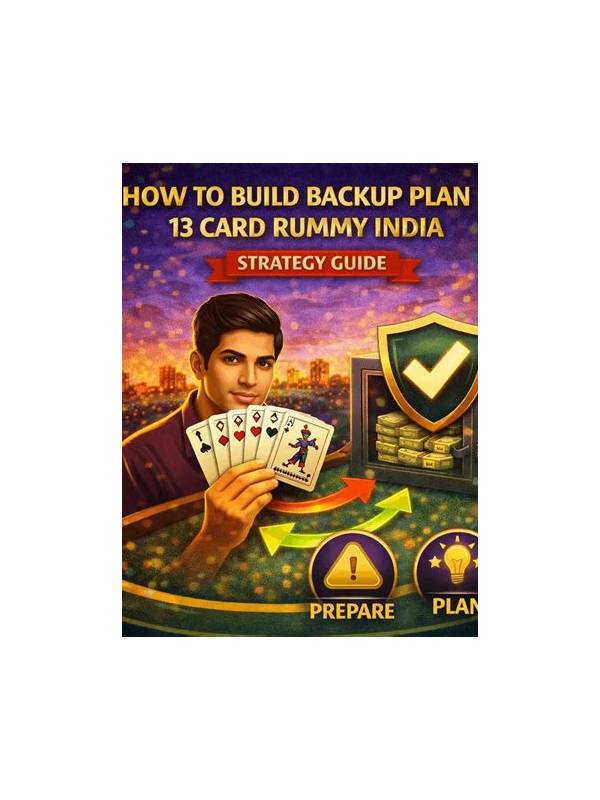
Identify the gap precisely
Suppose two cards suggest a sequence but the connecting middle card has not appeared. Name the exact gap and the suit involved. Then check whether the surrounding cards are truly compatible with the table’s rules. A vague feeling that a hand is “almost there” can encourage you to hold unrelated cards while waiting for one narrow outcome.
Separate routes from wishes
A route is supported when several unseen cards could improve it or when another arrangement can use the same cards. A wish depends on one exact card with no backup. Mark the missing-middle route as narrow if it has only one realistic completion. This does not mean abandoning it immediately; it means assigning it a cost and watching that cost grow.
Keep a second route alive
Look for a set, a neighboring sequence, or a flexible card that can move into another group. Avoid dismantling a confirmed pure sequence solely to protect a speculative gap. The alternative does not need to be perfect. It only needs to give you a sensible next action if the needed card fails to arrive.
Set a decision deadline
Choose a point at which you will reassess the gap: after the next draw, after two turns, or when a relevant card is discarded by another player. At the deadline, compare the route with the current alternatives. Ask what evidence improved it and what evidence weakened it. A deadline prevents hope from silently becoming the hand’s entire strategy.
Discard with awareness
Do not confuse patience with commitment
If the deadline arrives during a fast turn, use the simplest honest question: “Would I choose this route if I had just received the hand?” That reset removes sunk effort from the decision. Then keep, change, or release based on current support.
Waiting one more turn can be reasonable when the gap has strong support and the holding cost is small. It becomes commitment when you ignore a better route simply because you invested cards in the original idea. At each deadline, evaluate the current hand as it is. Past effort is not evidence that the missing card will arrive, and changing route is not an admission of failure.
When releasing a card near the gap, consider whether it is useful elsewhere in your hand and what information the discard provides. Do not hold every card that could theoretically connect. A clean, lower-risk hand with one honest gap is often easier to manage than a crowded hand built around several untested possibilities. Record the decision afterward if the route was difficult to evaluate.
Related Post
Rummy Strategy: Choose a Default Discard Under Pressure
A default discard rule can reduce panic, provided it remains a starting point rather than [...]
Rummy Safety: Plan a Screen Break During Extended Practice
A simple screen-break routine can protect attention and help keep rummy practice measured and comfortable. [...]