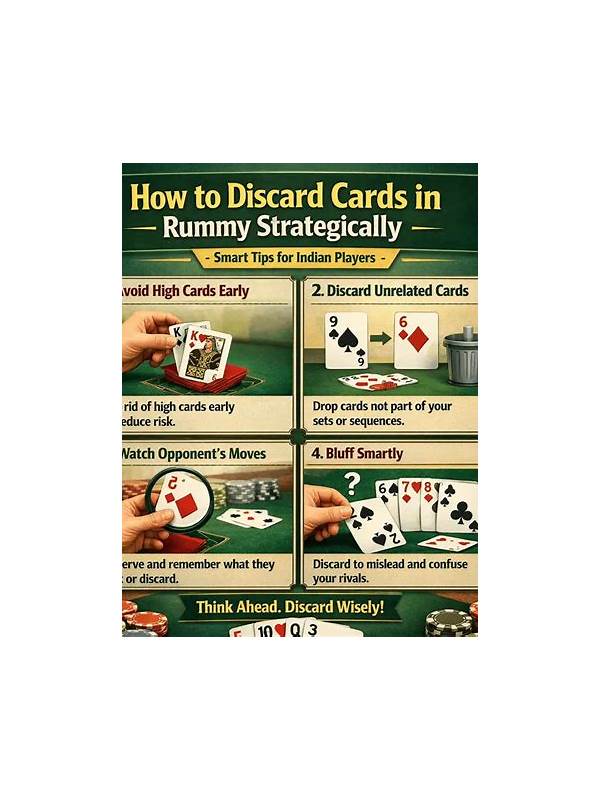
Rummy How-To: Create a Simple Endgame Checklist
The endgame compresses several decisions into a small number of turns. That is when players often rush, overlook a loose card, or declare before checking a required sequence. A simple checklist protects attention without trying to predict every draw. Keep it short enough to remember and use it whenever your hand appears close to completion.
Step one is to identify every group you believe is finished. Say the groups quietly or mark them in your preferred layout. Do not count a group merely because the cards look similar. Confirm whether it is a valid sequence, a set, or another structure allowed by the rules you are playing. Keep uncertain cards separate from confirmed groups so that confidence does not blur the distinction.
Step two is to inspect the remaining cards for dependencies. Which card must arrive before the hand can be complete? Which card can serve more than one role? If you need a narrow draw, decide how many turns you are willing to wait. If the hand can be reorganized without that draw, compare the safer arrangement now. A completed-looking group is not useful if it leaves a high-point card stranded.
Step three is to check the proposed discard. Ask whether it is truly unused, whether it could help an opponent, and whether removing it changes a possible sequence. Then check your hand size and the action order. Small procedural errors become expensive when attention is focused on the exciting final card.
Step four is a final rules check. Confirm the minimum sequence or group requirements, the treatment of jokers, and any local scoring condition. If the platform displays a confirmation screen, read it rather than clicking through automatically. A few seconds of verification can prevent an avoidable invalid declaration.
After the hand, keep the checklist that helped and revise the part you skipped. The purpose is not to slow every round. It is to create a reliable routine for moments when excitement, fatigue, or time pressure makes memory less dependable. A calm endgame is usually built from a small process repeated consistently. You can adapt the checklist to your interface. On a digital table, use the sorting or grouping tools only if they help you see the hand; a decorative arrangement is not a substitute for checking. On paper, leave a small gap between confirmed and developing groups. If the interface shows a possible declaration, treat it as a prompt rather than proof. Read the actual cards and rules yourself. It is also useful to practice the checklist when the hand is not close to completion. Rehearsing the routine in ordinary moments makes it easier to recall when the final draw creates pressure.
Related Post

The Ultimate Guide to the Best Rugby League Betting Apps
The Ultimate Guide to the Best Rugby League Betting Apps Are you a sports betting [...]
Rummy Variants: Build a Rule Card Before Switching Tables
A compact rule card prevents familiar habits from causing mistakes in a new rummy variant. [...]