Rummy FAQ: Why Does Sequence Length Matter?
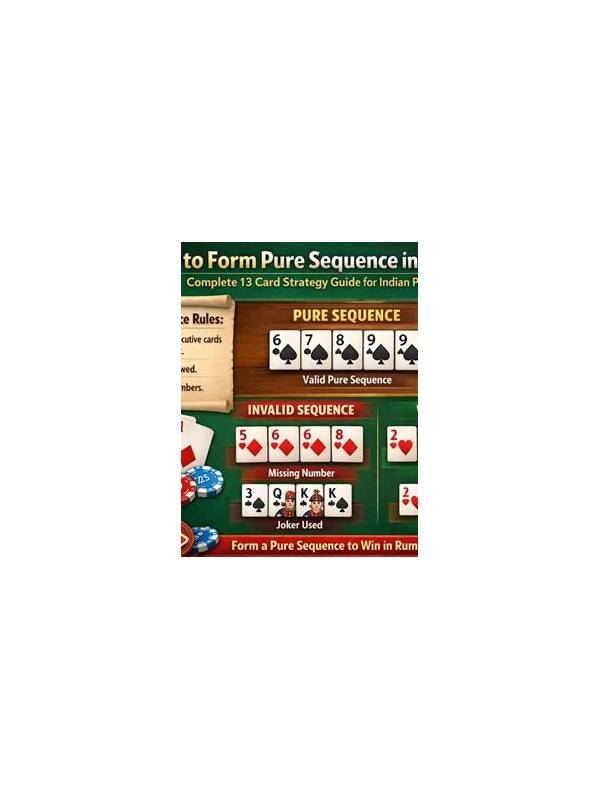
Length also affects checking. A long group may look convincing, while a short group may be mistaken for a legal sequence despite a wrong suit or order. Before declaring, inspect every group independently and verify required structures. Do not extend a sequence merely to make the screen look balanced. Keep a card only when it improves the legal hand or creates a credible next action; visual neatness is not strategy.
Sequence length matters because it changes both completion and flexibility. A short connected group may need one card to become useful, while a longer group may already be stable but contain cards that could support another arrangement. The right evaluation depends on the variant’s rules, declaration requirements, and the rest of your hand. Length is a clue, not a complete ranking system.
Short sequences are often attractive early because they are close to completion. They can also be fragile if the missing card is exact or if another group depends on the same connector. Before keeping a short run, list its possible improvements and identify whether a fallback exists. A route that is one card away but has only one realistic completion may be narrower than it looks.
Long sequences can provide structure and reduce the number of loose cards, but extending them may have a lower priority than repairing an invalid group elsewhere. Do not keep adding cards simply because the sequence is already successful. Once it has fulfilled its legal role, evaluate additional cards by what they contribute to the remaining hand.
Consider overlap. A card at the edge of one sequence may be the bridge to another. A middle card may connect two possible extensions, while an endpoint may have only one job. When choosing a discard, check whether releasing a card shortens a route, destroys a required pure sequence, or merely removes an optional decoration.
The practical question is not “Which sequence is longest?” It is “Which arrangement gives me a legal, manageable hand with credible next actions?” Count missing cards, note shared dependencies, and keep a fallback. This approach works across formats because it focuses on structure and decision quality rather than treating length as an automatic advantage. A long sequence is not automatically a legal or useful one. Check suit, order, and required pure structures independently. Keep extensions only when they improve the complete hand or create a credible next action. Visual neatness should never replace the declaration test.
Related Post
Rummy Table Notes: Record Decisions Without Slowing Play
A compact note-taking method can capture useful rummy lessons while keeping the session focused. [...]
Rummy Tips: Use a Route Scorecard at the Hand Midpoint
A compact route scorecard compares hand plans using progress, flexibility, and cost. [...]