Rummy Comparison: Early Melds or More Information First?
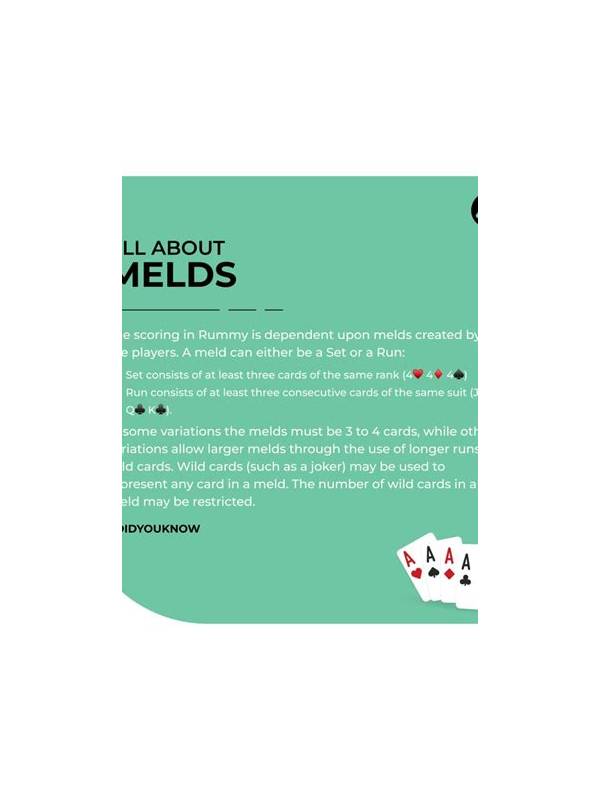
An early meld can feel like proof that a hand is improving. It may reduce loose cards and make the arrangement easier to read. Waiting, however, can preserve alternatives and provide more information about the table. Neither approach is automatically superior.
Choose the early route when the combination is strong and unlikely to interfere with a required structure. A clear sequence or group that uses cards with few competing roles can reduce mental clutter. It may also lower the cost of a later mistake. Before committing, check whether the meld consumes a connector needed elsewhere or leaves an expensive singleton untouched.
Waiting can be sensible when the proposed meld is based on a narrow assumption. A pair may become a group, a sequence, or a discard depending on what arrives. Holding it briefly gives you time to compare routes. Waiting is especially useful when your hand contains several flexible cards and no immediate need to expose a plan.
Information has a price. While you wait, another player may take a card or the visible pile may change. That does not mean waiting is wrong, but the cost should be named. Ask what you expect to learn within the next turn and what you will do with that information. If the answer is nothing, delay may simply be hesitation.
Use a commitment test: if this meld were fixed now, could you still build the required structures with reasonable alternatives? If yes, early commitment is more comfortable. If no, keep the cards separate until a clearer route appears. Also consider the rules of the format, since required sequence counts, joker treatment, and declaration conditions differ.
Review the choice by process rather than outcome. A delayed meld that later fails may still have been sound if it preserved valuable options. An early meld that happens to win may still have been fragile. Compare certainty, flexibility, information, and replacement cost. That four-part check turns a vague preference into a useful decision rule. You can test the rule in low-pressure practice by alternating your focus. In one group of hands, examine whether early commitment reduces clutter. In another, count what waiting actually teaches you. Review several decisions together rather than judging one outcome. The comparison is most useful when it shows which conditions make your own choices clearer, more flexible, and easier to explain. There is no universal clock for commitment. A clear meld can be valuable immediately, while a doubtful meld can remain doubtful even after several turns. Let the hand’s requirements and the format’s rules determine the timing, then use the same criteria when reviewing the result.
Related Post
How to Compare Points Rummy and Deals Rummy
Comparing scoring, pace, and decision pressure makes it easier to choose a rummy format that [...]
Rummy Strategy: Use a Turn-by-Turn Commitment Meter
A simple commitment scale helps you notice when a promising idea has become too expensive [...]