Rummy How-To: Build a Low-Risk First Sequence
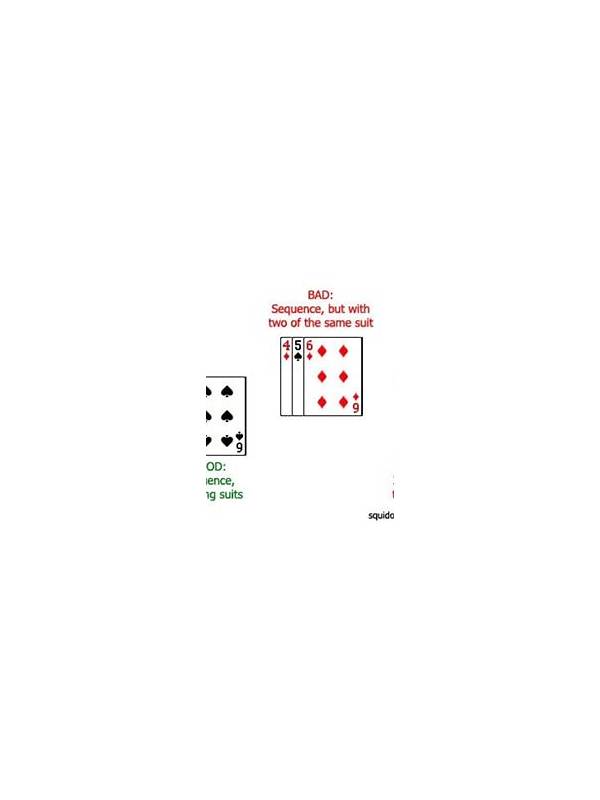
When a new hand contains several possibilities, begin by looking for the sequence that needs the least help. This is a low-risk first sequence: ideally natural cards of one suit, already adjacent, with a clear path to the format’s required foundation. It will not guarantee success, but it can reduce the number of urgent decisions later.
Scan each suit for two or more consecutive cards. A three-card natural run is the clearest candidate. A middle pair, such as 6 and 7, may be more flexible than an edge pair because it can grow in either direction. Do not reject a low edge pair automatically; compare it with the other structures in the hand.
Once you find a candidate, protect only the cards that genuinely belong to it. Avoid keeping unrelated cards merely because they share a suit. Four cards of one suit can contain a strong sequence and a disposable extra, so test each card’s role. Keeping too many cards around a suit can prevent you from forming a second group.
If a joker is available, first ask whether the natural cards can make the required pure sequence without it. A joker may be more valuable in a later group or may help reduce a high-card penalty. Using it immediately can make the hand feel complete while leaving fewer options for difficult leftovers.
Choose a review point. If the first sequence does not improve after several turns, compare it with the new information in the discard pile. Has the missing rank become less likely? Did a different group become stronger? A low-risk plan should still be abandoned when the evidence changes, especially if it blocks a better route.
After the first sequence is secure, divide the remaining cards into set candidates, sequence candidates, and loose cards. Work on one target at a time. A hand with one reliable foundation and a clear discard candidate is often easier to manage than a hand containing four exciting but incomplete ideas.
Finally, confirm the exact table rules. Sequence definitions, joker treatment, and minimum requirements vary. A low-risk sequence is useful only if it counts under the format you are playing. Building the foundation first makes the rest of the hand a problem of refinement rather than constant emergency repair. If two candidates look equal, prefer the one that leaves fewer high cards outside the foundation. This also gives later draws a clearer job: complete the foundation, then reduce the remaining uncertainty.
Related Post
Rummy Guide: Use a Three-Column Card Inventory
A three-column inventory makes a rummy hand easier to evaluate before the next draw. [...]
Rummy FAQ: Can You Change Plans Mid-Round?
Changing a rummy plan is normal when new evidence weakens the old one, but a [...]