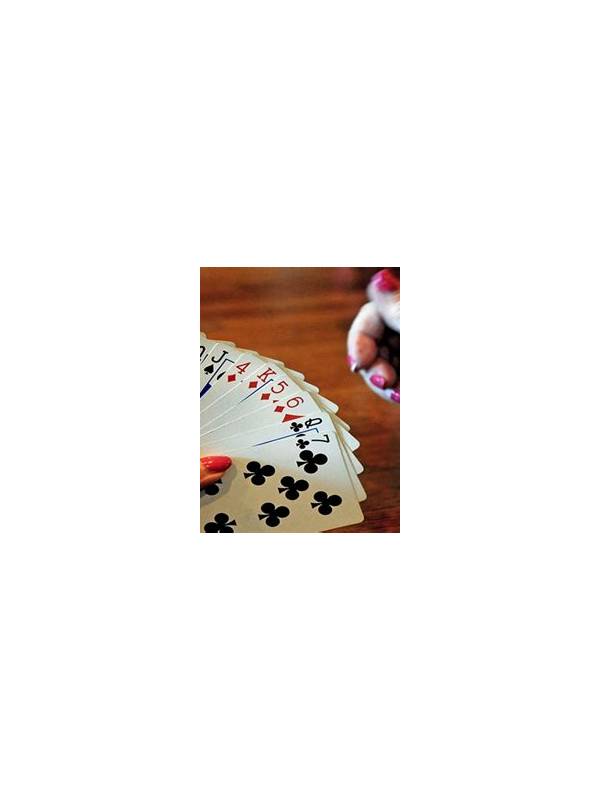
Rummy FAQ: Should You Keep a Card to Block an Opponent?

Keeping a card because another player may need it can be a valid observation, but it should rarely become the whole plan. The card still occupies space in your hand and may be less useful to you than the information suggests.
Begin with evidence. Has the player taken related cards from the discard pile, or are you inferring a need from one ordinary discard? A pickup and a repeated pattern are stronger clues than a single nearby card. If the evidence is weak, do not pay a large personal cost to make a speculative block.
Next calculate your opportunity cost. What card would you release if you kept the suspected blocker? Would that discard help you build, lower your points, or preserve a safer route? If the blocker is also useful to your hand, the choice may be easy. If it is an awkward high card that you could otherwise discard, holding it may be more expensive than any possible denial.
Timing matters. Early in a hand, opponents have many ways to change direction, so a block based on limited evidence is fragile. Later, a visible, nearly complete route may justify a short defensive hold if you can do so without damaging your own declaration chances. Even then, set a review point rather than holding forever.
Avoid confusing defense with control. You cannot see every hidden card, and an opponent may already have what they need. Your job is to improve your own hand while using reliable information when it genuinely changes the comparison. A defensive choice that leaves you with no productive next draw is not automatically clever.
The practical question is: “If I knew the opponent did not need this card, would I still keep it?” If the answer is yes, your own plan supports the decision. If the answer is no, demand strong evidence and a low cost before committing. Good defense is selective, temporary, and subordinate to a valid hand of your own.
There is also a difference between blocking a card and withholding information. A discard that looks harmless to you may be exactly the card another player needs, but you cannot reliably protect every possible route. If you choose to hold one suspected blocker, keep reviewing it against your own developing groups. Release it when your hand gains a stronger reason for a different discard or when the opponent’s pattern stops providing evidence. A defensive hold should expire naturally when its justification disappears.
Related Post
How to Separate Rummy Skill Practice from Real-Money Play
Separating learning exercises from financial play makes progress easier to measure and risk easier to [...]
Rummy Table Rules for Chat, Audio, and Shared Screens
Simple communication boundaries make online rummy more private, fair, and comfortable for every participant. [...]