Rummy FAQ: Can a Sequence Be Valuable Before It Is Complete?
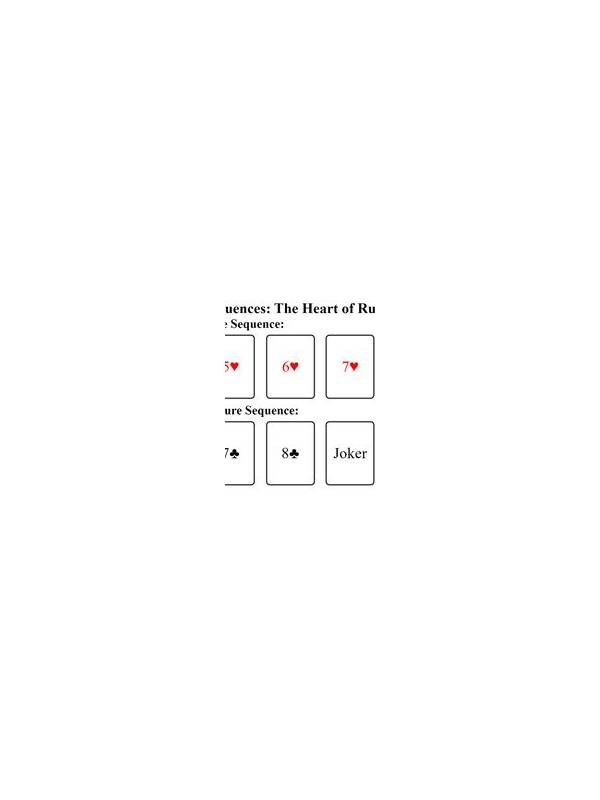
Yes. An unfinished sequence can be valuable before it is complete, but “valuable” does not mean that it should be protected forever. Its value comes from the number of sensible ways it can improve, the points tied up in it, and how well it fits the rest of your hand.
Consider two connected cards in the same suit. If either of several nearby cards could help, the connection has flexibility. If only one exact card would help and that card is already visible elsewhere, the connection is fragile. The cards may look similar in your hand, but they do not represent the same opportunity. This is why counting possible improvements is more reliable than simply counting cards in a group.
An unfinished sequence also gains value when it works with a second group. A middle card may bridge two possible arrangements, giving you choices after the next draw. However, a bridge can become a trap if you keep it while ignoring several unconnected high cards. Ask what you must give up to wait for the sequence. If holding it prevents you from reducing a large point risk, its practical value may be lower than its appearance suggests.
Timing matters as well. Early in a hand, a flexible connection may deserve time because many cards remain unseen. Later, the same connection may need a deadline. If the needed cards have not appeared and your other groups are improving, continuing to wait can become expensive. Set a review point instead of making an emotional promise to keep the pair.
Finally, distinguish structural value from scoring value. A sequence may reduce points only after it is complete, while a different card may already belong to a confirmed group. Neither choice is automatically correct. Compare the chance of improvement, the consequence of a miss, and the alternative plans available now.
The short answer is that an incomplete sequence is a route, not a result. Treat it as a candidate plan, review its cost regularly, and be willing to release it when the evidence changes.
For practice, take random hands and pause before each discard. Name the unfinished sequence, list its possible improvements, and identify one alternative use for those cards. Then compare the answer with the choice you make. This exercise trains you to see value as changing information rather than a permanent property of a pair. It also makes later reviews more concrete because you can identify exactly when a promising route stopped being worthwhile.
Related Post

Rummy Safety: Avoid Playing While Emotionally Rushed
Recognizing emotional rushing before a session helps protect time, money, and the quality of important [...]
Rummy Tips: Compare Hand Plans by Number of Required Arrivals
Counting the arrivals each hand plan needs provides a practical way to compare progress without [...]