Rummy FAQ: What Should You Do When Every Discard Looks Useful?
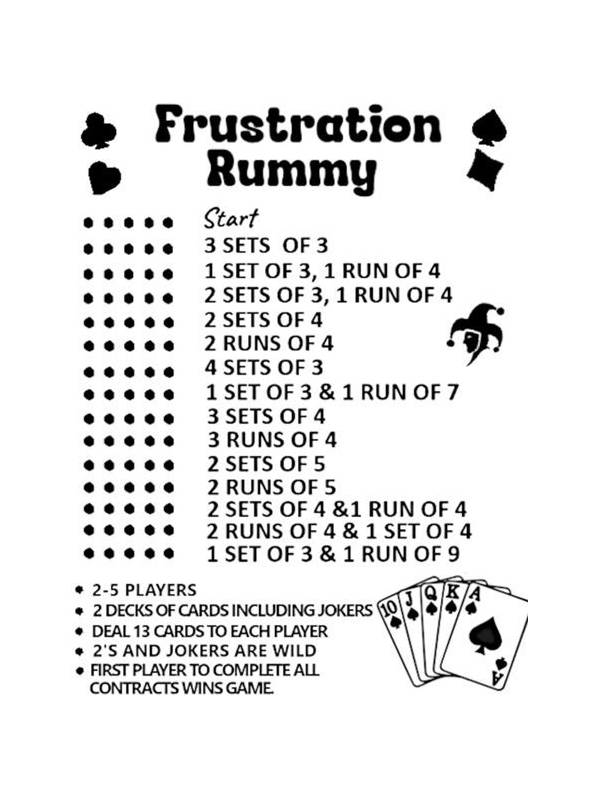
It is common to reach a rummy turn where every card seems useful. One card extends a sequence, another supports a set, and a third protects a future option. This does not necessarily mean the hand is strong. It may mean that too many cards are carrying small responsibilities at once. The solution is to rank those responsibilities rather than searching for a perfectly harmless discard.
First separate completed work from potential work. A card inside a valid, secure group has a different status from a card that merely fits a possible group. Protecting an actual requirement usually comes before protecting a hope. If the rules require a pure sequence and you have only one credible route to it, that route has priority even if another card looks attractive for a set.
Next identify dependencies. A dependency is a card that needs a specific future event before it becomes useful. A pair needs a matching rank; an open sequence needs a neighbor; a closed gap needs one exact rank. Mark how many future cards each candidate needs and how replaceable those cards are. A card supporting one narrow dependency may be less valuable than a card supporting several broad ones, even when the narrow route looks closer to completion.
Then use a reversibility test. If you discard this card, can your hand still move in more than one direction? A reversible discard leaves multiple reasonable next steps. An irreversible discard commits you to a single route or destroys the only backup. When two candidates have similar point costs, the reversible choice can reduce the chance of being trapped by the next draw.
Opponent information is a final tie-breaker, not the first filter. Consider whether one discard would obviously feed a likely opponent, based on the public pile and recent actions. Avoid assuming certainty from one discard pattern. The aim is simply to prefer the option that protects your structure without offering unnecessary information when the structural alternatives are close.
If the clock is running, use a compact sequence: requirement, dependency, reversibility, opponent signal. Give each candidate a quick answer. You do not need to prove the best move; you need a defensible move that keeps the hand alive. A short routine also prevents the common error of staring at the same three cards until the decision becomes emotional.
After the hand, review the reason rather than only the result. A discard can be sensible even if the next card would have completed the discarded route. Record what you knew at the time, which dependency you protected, and whether the choice left a backup. That record turns an uncomfortable tie into useful practice. Eventually, “everything is useful” will become a signal to look for hidden dependencies and choose the card with the smallest strategic job.
Related Post
Rummy FAQ: Can a Completed Group Still Be a Problem?
A completed group can still create trouble when it is illegal, misread, or consuming cards [...]
Rummy Practice: Use One-Card Counterfactuals to Test a Plan
One-card counterfactual drills help players compare rummy plans without needing a live table. [...]