Rummy Tips: Treat the Discard Pile as Evidence, Not Instruction
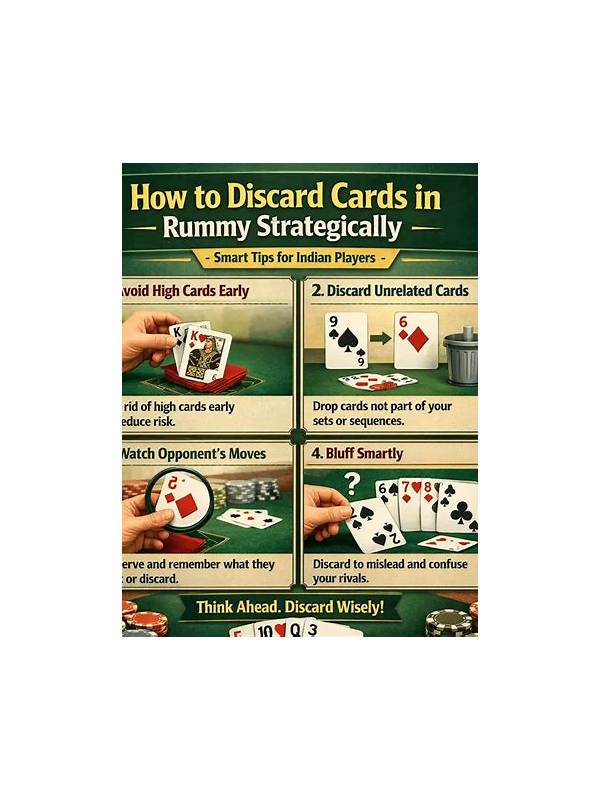
The discard pile contains useful public information, but it is easy to give it too much authority. A visible card may look like the missing piece of your hand, yet taking it can create a new problem or reveal that the route was never strong. Treat the pile as evidence to evaluate, not as an instruction to follow.
When you see a useful-looking discard, ask three questions. What does the card improve immediately? What card would it displace? What other route would become harder if you take it? The first question captures attraction. The second and third reveal the cost. A card that completes a small group may be less helpful than a card that preserves two future routes.
Consider why the card is available without assuming you know the reason. It may be unwanted, redundant, or simply part of another player’s plan. The fact that someone discarded it is evidence that it was not needed by that player at that moment, not proof that it is safe for you or useless to everyone else.
Compare the discard with the closed draw according to the rules. Taking a visible card can provide clarity, but it can also expose your interest and reduce flexibility. Drawing unseen keeps information private but may produce a card with no connection. Neither source is automatically better. Let the hand’s structure and the table’s information guide the choice.
Use the pile to eliminate routes as well. If several cards required by a narrow sequence are already visible, lower that route’s priority. Keep the conclusion modest: “less attractive” is more accurate than “impossible” unless all relevant information is known. This language helps you move on when a favorite plan stops making sense.
After taking from the pile, re-sort the hand. Do not leave the new card mentally separate just because it came from a public source. Give it a current role, identify its future use, and select a discard using the same method you would use after a closed draw.
The discard pile is most valuable when it improves your questions. It can show what is visible, which routes are becoming crowded, and whether a proposed plan has a realistic supply of cards. It cannot choose your hand for you. Read it carefully, compare its evidence with your full position, and keep enough flexibility to change course.
One useful discipline is to name the evidence before naming the conclusion. Say, “two cards from this route are visible,” before saying, “this route is now less attractive.” This order keeps the observation separate from the judgment and makes later review easier. If the route succeeds anyway, you can examine whether your threshold was too strict without pretending that the original evidence never existed.
Related Post
Rummy How-To: Review a Draw Using Before-and-After Notes
A brief before-and-after note shows whether a draw improved the hand or merely changed its [...]
Rummy Safety: Set a Pause Rule for Unexpected Payment Prompts
A simple pause rule can prevent rushed payment decisions when an app displays an unexpected [...]