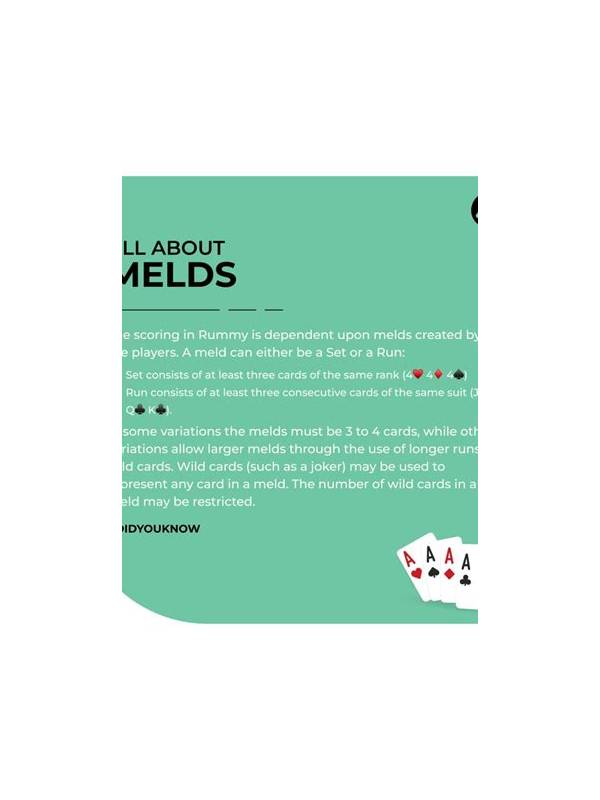
Rummy FAQ: Why Does a Good Sequence Still Need Context?

A good sequence is not automatically the best decision in every rummy position. It may be valid, low in points, and close to complete, yet still consume a card needed for a required pure sequence or leave several loose cards behind. Context determines whether the sequence helps the whole hand.
First check what the variant requires. Some formats distinguish pure and impure sequences or impose specific declaration conditions. A sequence that looks complete may not satisfy the relevant requirement. Read the current rules before assigning strategic value to any group.
Next inspect the cards outside the sequence. If completing the group frees a high card or turns the remaining hand into clear sets, the sequence may be a strong anchor. If it uses the only connector between two other groups, its immediate completion may reduce flexibility. Place the sequence beside the rest of the hand and evaluate the result as one structure.
Consider timing. Early in a hand, a flexible partial sequence may be more useful than a rigid completed group if it preserves several routes. Later, a confirmed sequence can reduce risk and simplify the final check. The same cards can therefore deserve different treatment at different points in the hand.
Public information matters too, but only as an adjustment. Visible discards may make a narrow sequence less attractive or may support a broader route. Do not treat an unseen card as guaranteed. Use cautious language and keep a fallback when possible.
Finally, ask whether the sequence has become a comfort object. Players sometimes protect a familiar group because it feels like progress, even after the rest of the hand has changed. If the sequence blocks a stronger requirement or carries a growing opportunity cost, be willing to reorganize it while following the rules.
A good sequence is good because it supports the complete hand, not because it looks neat in isolation. Check validity, timing, dependencies, and what remains outside the group. This context turns a visual pattern into a reasoned decision today.
When reviewing a sequence, ask what it changed in the next decision. Did it reduce the number of loose cards, protect a requirement, or merely make the layout look cleaner? If the answer is only visual comfort, keep comparing alternatives. A sequence can remain in the hand while receiving a lower priority, especially when another group has a cheaper repair cost or a clearer fallback.
Related Post
How to Notice Tilt During a Rummy Session
Recognizing emotional tilt early gives rummy players a practical chance to pause before decisions become [...]
Rummy Guide: Build a Rule Checklist Before Joining a Table
A compact rule checklist helps players confirm the format before making costly assumptions. [...]