Rummy Comparison: Visible Discard Piles and Hidden Information
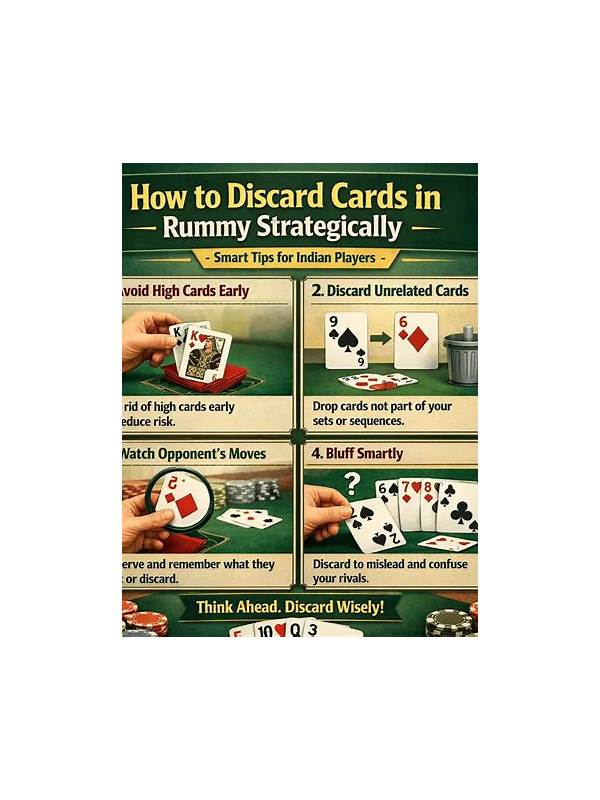
A visible discard pile gives players more information than a completely hidden system. You can see which cards have been released, notice repeated suits or ranks, and decide whether an open draw is useful. At the same time, your own pickups and discards reveal information to others. The advantage is shared, not private.
The main benefit is planning. Visible cards can reduce uncertainty about a narrow route. If several needed cards are already exposed, you can stop treating that route as a strong possibility. If a useful connector appears, you can compare its immediate value with the signal created by taking it. This turns the discard pile into a source of evidence.
The main cost is disclosure. A pickup may tell opponents which rank or suit you value, especially when it follows a matching discard. Repeatedly drawing from the same area can make your plan easier to read. You do not need to hide every intention, but you should avoid giving information away without receiving a meaningful improvement.
In a hidden system, concealment is greater, but planning is weaker. An unknown draw can preserve ambiguity while offering no guarantee of relevance. This may suit a flexible hand, yet it can also produce more difficult rearrangements. The comparison is therefore not between information and no risk; it is between different kinds of uncertainty.
Use the visible pile strategically. Take an open card when it completes a requirement, removes a serious liability, or creates several useful routes. Decline it when it only decorates a speculative plan or exposes a pattern that helps an opponent more than it helps you. The exact balance changes with the stage of the hand.
The discard pile is a public record of partial decisions. Read it for what it can prove, and avoid inventing certainty from one card. Combine visible information with your own hand, the format rules, and the table’s pace. A strong player benefits from the pile while remembering that every other player can read the same page.
When the pile becomes crowded, focus on recent and relevant evidence rather than trying to remember everything. A card connected to your current route deserves more attention than an unrelated early discard. You can also note which useful cards are no longer available in the visible area. This keeps the public information manageable and prevents an old signal from controlling a plan that has already changed.
Relevance matters more than volume when time is limited.
Related Post

The Ultimate Guide to the Best Rugby Betting
The Ultimate Guide to the Best Rugby Betting The world of rugby betting can be [...]
Rummy How-To: Review a Hand With Color-Blind-Friendly Symbols
Simple symbols and text labels can make rummy hand review clearer when color alone is [...]