Rummy Guide: Check a Hand From the Opponent’s Perspective
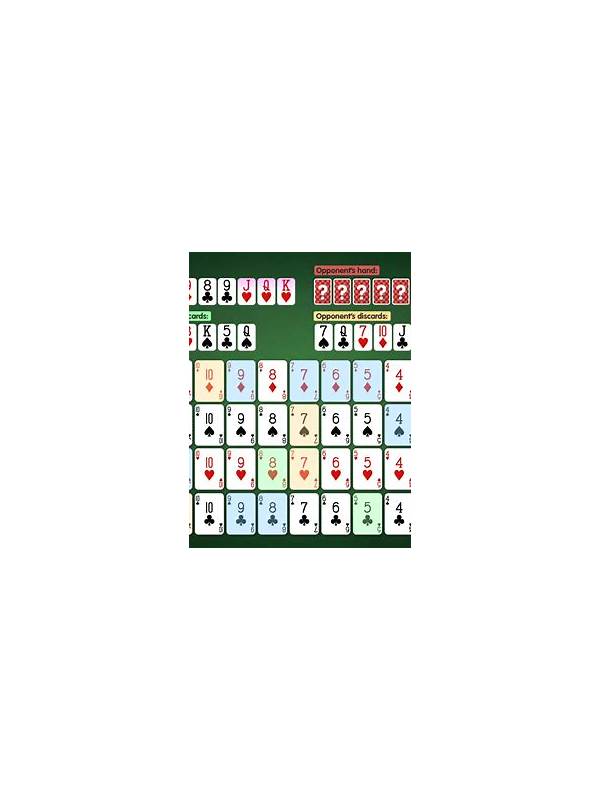
You cannot know an opponent’s complete hand, but you can examine your own move from the table’s perspective. This does not mean trying to guess perfectly. It means asking what your discard communicates, what it might offer, and whether another choice keeps more uncertainty in the game.
Before discarding, identify the card’s obvious relationships. Is it part of a common sequence? Does it complete a visible gap for another player? Has a related card already been picked from the open pile? These observations do not prove that a card is dangerous, but they can help you compare it with alternatives.
Next consider the signal your discard sends. Releasing one end of a suit may suggest that your plan moved away from that suit. Keeping a pair while discarding a neighbor can create a different impression. Do not make this the main basis of a move; legal structure and point reduction come first. Treat table signals as a secondary factor when two choices are otherwise close.
Use a simple two-step test. First ask, “Would I be happy to draw this card if I were building the most obvious route?” Then ask, “Does my alternative protect a requirement or reduce more risk?” If your discard is attractive to several plausible routes and the alternative has no special value, the alternative may be preferable. If avoiding the discard forces you to keep an expensive isolated card, sharing a potentially useful card may still be the lesser cost.
Remember that players have different styles and that online timing can be affected by connection, interface, or habit. Do not interpret every pause or pickup as a reliable message. Recheck your assumptions when new evidence appears, and label them as possibilities rather than facts.
This perspective check is most helpful during review. Save one example where you discarded a card another player later used, then list the evidence you had before the move. Could you reasonably have chosen differently, or was the result unknowable? Learning that distinction prevents hindsight from turning ordinary uncertainty into self-blame.
This check should never become a reason to play more hands. A useful review can happen after the session from the information already available. If you cannot remember the details, accept that the situation was uncertain and move on. Responsible analysis improves future choices; it does not require proving that every past outcome could have been avoided.
The aim is better calibration, not perfect prediction. Acknowledge uncertainty, make the next legal move, and let the review teach you without changing the facts.
Related Post
Rummy Comparison: Keeping a Pair Versus Chasing a Sequence
Compare two common hand-building choices using flexibility and timing. [...]
Rummy How-To: Recover After Breaking the Wrong Group
A calm recovery process can turn a strategic mistake into useful information. [...]