Rummy Card Substitution: Test a Joker’s Best and Worst Use
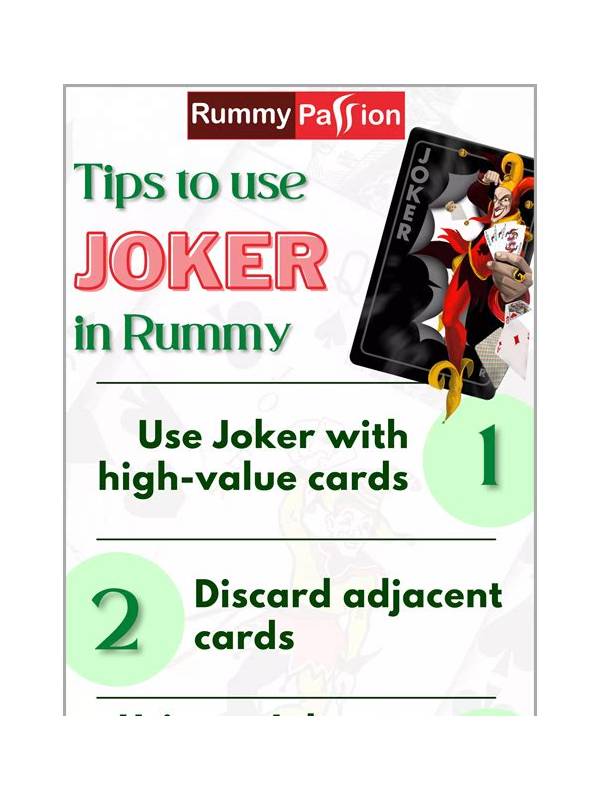
A joker is valuable because it can complete more than one kind of group, but flexibility can also create confusion. Players sometimes place a joker wherever it makes the hand look neat and then stop checking whether that placement is actually useful. A substitution test gives the card a more disciplined evaluation.
First, write down the group you are considering. In a sequence, identify the missing rank and suit that the joker would represent. In a set, identify the missing rank in the chosen suit. Then remove the joker mentally and inspect the remaining cards. Does the group still have a sensible future, or is the joker hiding a weak arrangement?
Now test the best use. Place the joker where it creates the largest improvement in structure, not merely the largest number of cards in one group. A joker that turns two connected cards into a valid sequence may be more useful than one that completes a set while leaving several isolated high cards. Consider whether the placement protects a pure requirement if the variant has one, and whether it leaves another group with a realistic route.
Next test the worst plausible use. Imagine assigning the joker to the tempting group that looks complete but consumes a card needed elsewhere. This reveals opportunity cost. If the hand collapses when the joker is used in one place, that group may be borrowing flexibility from the rest of the plan. You do not need to avoid the use automatically; you need to recognize its cost.
Finally, compare the joker with keeping it uncommitted for one more turn. This option has a benefit and a risk. The benefit is that new information may reveal a better route. The risk is that holding the joker may keep a weak card in the hand or delay a useful discard. Ask what specific information you expect to gain and when you would change your mind. “It might help later” is not a complete plan.
The substitution test is especially helpful near a declaration. Check that every group remains valid under the actual variant rules, that the joker is not being counted twice, and that the remaining cards have no hidden duplicate. A flexible card should improve a verified structure, not replace verification. Treat it as a tool with several jobs, then choose the job that produces the most stable complete hand. A useful final question is whether the joker is covering a genuine gap or disguising an incompatible group. If the latter is true, change the arrangement before judging the joker’s value. Flexibility is strongest when the underlying cards already point toward a legal plan.
Related Post
Rummy Safety: Protect Your Attention During Long Sessions
Planned pauses and a comfortable playing environment help keep decisions deliberate during extended rummy sessions. [...]
Rummy Card Counting Myths: What Observation Can and Cannot Do
Learn the difference between noticing discards and believing that memory can guarantee the next rummy [...]