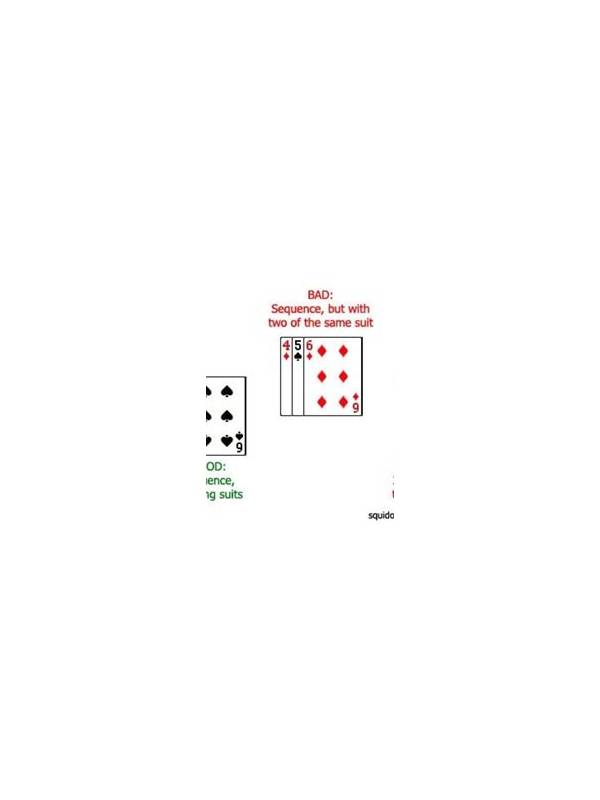
Rummy FAQ: Is a Pair Always Worth Keeping?

If you keep a pair, decide when you will reassess it. A clear review point prevents a temporary hold from quietly becoming a permanent habit.
At that review point, compare the pair with every confirmed group and the weakest isolated card. The answer may change even when neither card in the pair has changed.
A pair is not automatically a good hold. It may become a set, support a sequence, or simply occupy space while more useful cards pass through your hand. Evaluate the pair in context instead of treating the label “pair” as a permanent instruction.
Start with the rank and suits. A pair that also connects to cards of the same suit may serve two plans, giving it flexibility. A pair of isolated high cards may be less attractive because it needs a specific rank or another suit while carrying more potential penalty. The same pair can therefore be valuable in one hand and awkward in another.
Check what the pair blocks. If keeping it forces you to break a confirmed sequence, the cost may be too high. If your hand has several unconnected cards, the pair may provide useful structure while you wait. Count realistic improvements rather than imagining every possible draw as equally likely.
Timing changes the decision. Early in a round, a pair can be a reasonable temporary hold. Near a likely declaration, reducing deadwood and protecting required structures may matter more. Watch the discard pile for information, but do not assume a missing card is guaranteed to appear or guaranteed to be gone.
Before keeping the pair, state its job in one sentence. If you cannot explain what it contributes, compare it with the weakest card in your hand and choose based on current risk. Review the decision later without judging it solely by the outcome. A pair is a resource, not a rule, and responsible play still requires clear limits on time and spending.
Pairs also interact with what you reveal. Taking a visible card may tell others that its rank or suit interests you, while holding a pair privately gives less direct information. This is only one consideration and should never outweigh a required sequence or serious point exposure. In a friendly practice game, prioritize learning the hand structure rather than trying to disguise every intention. After the round, ask whether the pair created a genuine option or merely delayed a difficult discard. That answer will be more useful than whether the next card happened to complete it.
Related Post

Exploring Yono All Game Bihar Government’s Digital Gaming Initiative
Exploring Yono All Game Bihar Government’s Digital Gaming Initiative Are you a gaming enthusiast in [...]
Building a Rummy Review Habit After Each Round
A brief neutral review can turn one completed round into useful information for the next [...]