Rummy Table Review: A Five-Minute Post-Game Routine

Reviewing a completed rummy game is useful when it is brief and factual. The aim is to identify decisions you can improve, not to reconstruct every card or blame luck for every outcome. A five-minute routine is enough for most practice sessions and helps keep learning separate from the emotional result.
Record the starting shape
Write down the broad features of the opening hand: how many pairs, connected cards, high cards, and jokers it contained. You do not need a perfect transcription. Note which combination you chose to build first and why. This creates a baseline for comparing the plan you had with the hand you eventually produced.
Mark the first important choice
Find the earliest discard or hold that changed the direction of the hand. Ask what information was available then. Did you protect a pure sequence? Did you hold a high card because it had two possible neighbors? Did you keep a weak pair for too many turns? Describe the choice in neutral language. “I waited four turns for a distant card” is more useful than “I played terribly.”
Check the ending structure
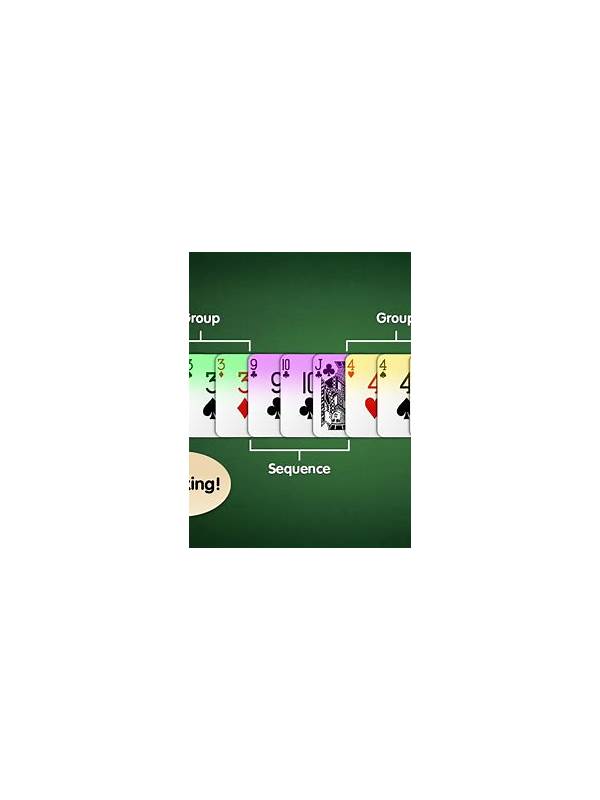
At the end, count loose cards and identify which combinations were valid. If a declaration failed, locate the exact issue: an impure sequence, a duplicate rank in a set, or an ungrouped card. If the hand was valid but lost, distinguish the result from the decision quality. A sound plan can still lose in a random deal.
Choose one experiment
Do not create a list of ten corrections. Select one behavior for the next game, such as discarding isolated high cards earlier or sorting the hand after every draw. A single experiment is easier to observe and evaluate. If the change helps, keep it; if it does not, return to the notes and test a different hypothesis.
Finally, close the review. Endless replay can become a reason to continue playing when you intended to stop. Record the lesson, take a break, and decide separately whether another session fits your time and budget. A useful review improves awareness while respecting the boundaries that make play comfortable.
Keep the notes private and simple. A date, format, one turning point, and one experiment are enough. Over time, the record may show that some apparent mistakes were unavoidable outcomes, while others repeat whenever you rush or play while distracted. That distinction keeps the review honest and useful.
Related Post

Rummy How-To: Build a Quick Pre-Game Checklist
A short preparation checklist keeps rules, device settings, and personal limits clear before the first [...]
Rummy How-To: Build a Simple Endgame Checklist
A short endgame checklist reduces missed requirements when the hand is close to completion. [...]