Rummy How-To: Build a Small Card Inventory

A card inventory is a short record of information that can affect your next decision. It is different from trying to remember the entire deck. The inventory should answer practical questions: which of my routes are supported, which cards have appeared, and which assumptions are still weak?
Begin with your own hand. Mark each card as belonging to a foundation, a developing group, or a loose position. A foundation is already legal or close to legal under the format. A developing group has a named missing requirement. A loose card has no current role. These labels can change, so treat them as temporary descriptions rather than permanent identities.
Add only high-value public information. Record cards that directly affect your unresolved groups, such as a visible card that would have completed a narrow route. Also record repeated appearances that reduce the plausibility of a plan. Do not fill the inventory with every unrelated discard; extra detail can hide the few facts that matter.
For each developing group, write its requirement in plain language. “Needs one of two neighboring cards” is more useful than “good potential.” If the requirement is exact, say so. Then note whether the group has a backup. A pair with several possible continuations deserves different treatment from a pair that needs one unseen card.
Update after the draw and again after the discard. The draw may promote a group, while the discard may remove a route or reveal new public evidence. A two-step update also helps catch a common error: evaluating the discard as if the hand had not changed after drawing.
Keep the inventory small enough to read in a few seconds. Three columns are usually enough: group, requirement, and deadline. For example, “foundation: safe; sequence: one of two cards, review next turn; loose: release candidate.” The exact wording does not matter as long as it guides a decision.
At the end of the hand, compare the inventory with the actual result. Which label stayed accurate? Which group received too much patience? Which public fact did you record but fail to use? This review turns a memory aid into a learning tool. The inventory should reduce confusion, preserve uncertainty honestly, and make the next action easier to explain.
Avoid turning the inventory into a promise about what will happen. A requirement describes a route; it does not make the needed card more likely. If several turns pass without support, update the deadline and compare the group with a fresh alternative. A small, honest inventory should make it easier to abandon a weak idea, not give that idea a more official name.
Related Post

Rummy Tips: Use a Decision Budget Each Turn
Limit mental clutter by giving each rummy turn a small, repeatable set of questions. [...]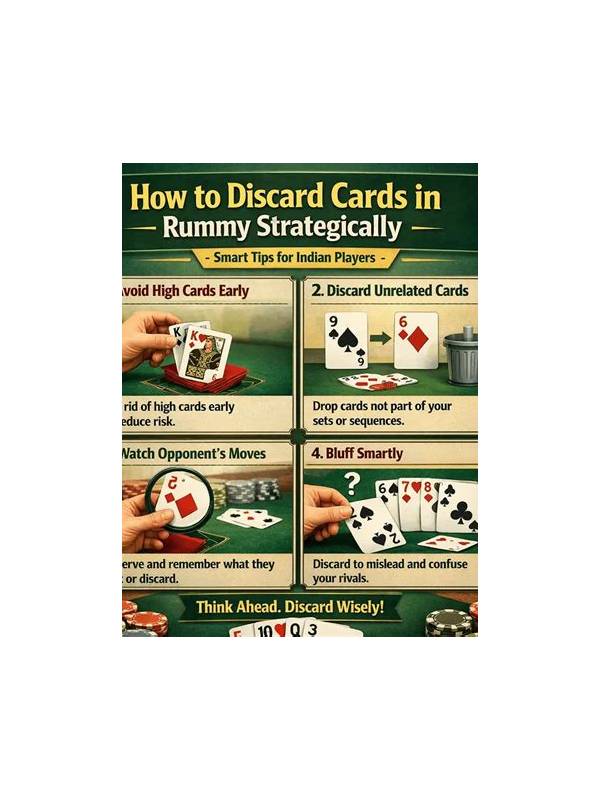
Rummy How-To: Read an Opponent’s Discard Pattern Carefully
A careful discard review can provide useful clues without turning limited table information into false [...]