Rummy How-To: Build a Simple Discard Queue
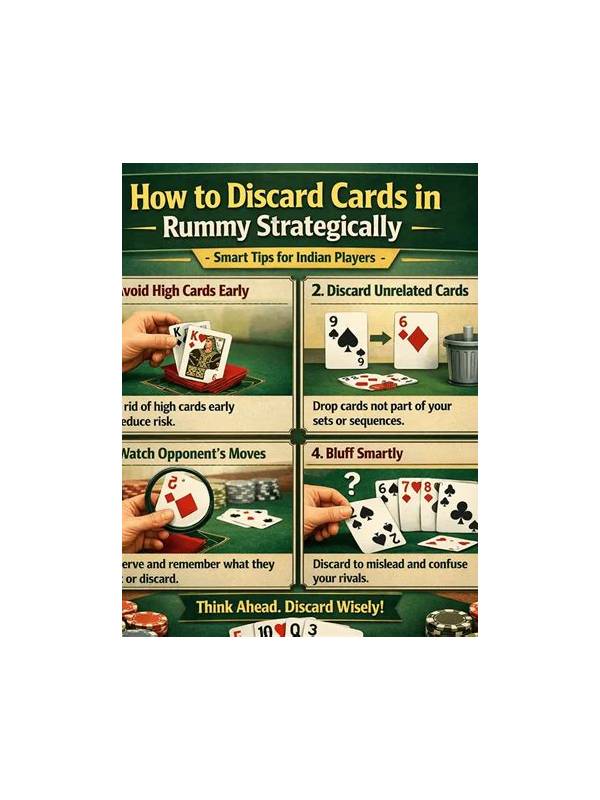
A discard queue is a short ranked list of cards you are willing to release as the hand develops. It is not a fixed promise. New draws, visible pickups, and changing combinations should reorder it. The benefit is that you begin each turn with a shortlist instead of evaluating every card from zero under time pressure.
Create the first queue after sorting your hand by suit and rank. Put isolated high cards near the top, followed by isolated cards with few realistic connections. Keep cards that belong to a confirmed sequence or set at the bottom. Partial groups sit in the middle because they need evidence before they deserve long-term protection.
Give every partial group a reason for staying. For example, a pair may have two possible connectors, or a duplicate may combine with another rank already held. If you cannot state the reason in a few words, the cards should move upward in the queue. This simple rule reduces attachment to combinations that only look promising when viewed separately.
After each draw, compare the new card with the queue. If it completes a valid structure, remove the structure’s members from discard consideration. If it is unhelpful, place it according to penalty and flexibility. Avoid automatically discarding the newest card; sometimes it exposes a useful alternative, while an older card has become the true weakness.
Review the top two candidates before releasing one. Check whether either card is adjacent to a pattern another player appears to be collecting. If both are similarly weak, prefer the discard that gives away less useful information and leaves your hand easier to read. When the game is close to ending, prioritize reducing penalty and preserving a clear declaration route.
The queue should stay short, usually three or four cards. A long list becomes another form of clutter. At the end of the hand, review whether your top candidate was actually a good discard and why. Over time, these reviews reveal whether you overprotect pairs, ignore penalty, or react too strongly to visible cards. The queue turns those lessons into a repeatable routine. Do not confuse it with a prediction about the next card. A new draw, completed sequence, or change in turn order can make the ranking obsolete, and updating it is a sign of good observation. This keeps the method practical, focused, and easy to apply during the next ordinary turn. Use the result as a prompt for the next choice, then return attention to the current cards and visible evidence.
Related Post
Rummy FAQ: What Is a Redundant Card?
A redundant card supports no unique route and may be the first candidate for a [...]
Rummy Tips: Record the Reason Before the Result
Improve post-game learning by writing down the reason for a rummy choice before seeing what [...]