Rummy How-To: Build a Role-Based Discard Vocabulary
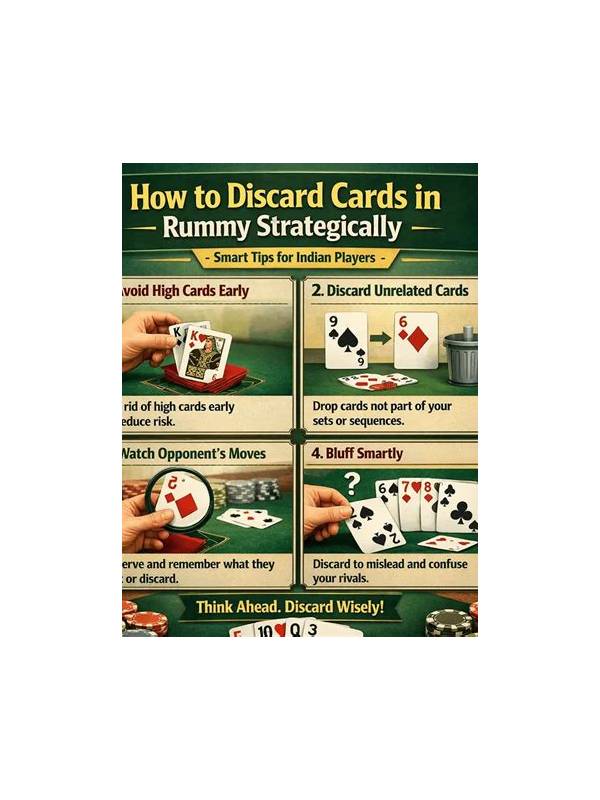
Why vocabulary helps
The same card can be described as a bridge, a project, a reserve, or a release candidate depending on its role. If your descriptions change from turn to turn, it becomes difficult to see why a decision changed. A small personal vocabulary gives you stable labels without requiring complicated notation.
Choose four or five terms. “Foundation” can mean a confirmed legal group. “Project” can mean an unfinished group with a specific next card. “Bridge” can mean a card that links two credible routes. “Reserve” can mean a flexible card kept for a stated reason. “Release” can mean a card with no current job or an expired plan.
Apply the words before discarding
For each candidate, say its label and evidence in one phrase. “Project, waiting for one middle card.” “Release, high point and no connection.” “Bridge, supports two routes but has a deadline.” If you cannot finish the phrase, the card may need a hand reset before you choose.
Use the vocabulary to compare similar candidates. A release is usually easier to discard than a foundation, but two projects may still compete. A bridge may deserve protection early and release later if neither route improves. Labels support judgment; they do not replace the rules, score, or timing of the format.
Review changes in language
After the hand, note when a card’s label changed. A reserve that became a project may show a useful draw. A project that remained a project for too long may need a deadline. A foundation that turned out false may reveal a legality check you skipped. These are more actionable lessons than a general note about playing badly.
Keep the vocabulary small and familiar. The purpose is to reduce mental friction, not to build a private language that takes effort to remember. When the labels make your next action clearer, they are doing their job.
Avoid labels that imply certainty you do not have. “Likely project” may be more honest than “sequence,” and “possible bridge” may be better than “safe card.” Precise language keeps your confidence calibrated. If a label becomes too broad to guide an action, replace it with a phrase that includes the missing evidence or the deadline. The vocabulary should clarify decisions, not decorate them.
Say the label quietly or write it in a short review note. The act of naming the role is often enough to expose a card that has been kept only from habit. Update the label whenever a new draw changes the evidence.
Related Post
Rummy Comparison: Draw Pile Information Versus Discard Safety
Choosing between unseen cards and known discards involves a trade-off between information value and opponent [...]
Rummy Tips: Use Suit Distribution as a Clue
Suit distribution can reveal how concentrated or flexible a rummy hand is before you choose [...]