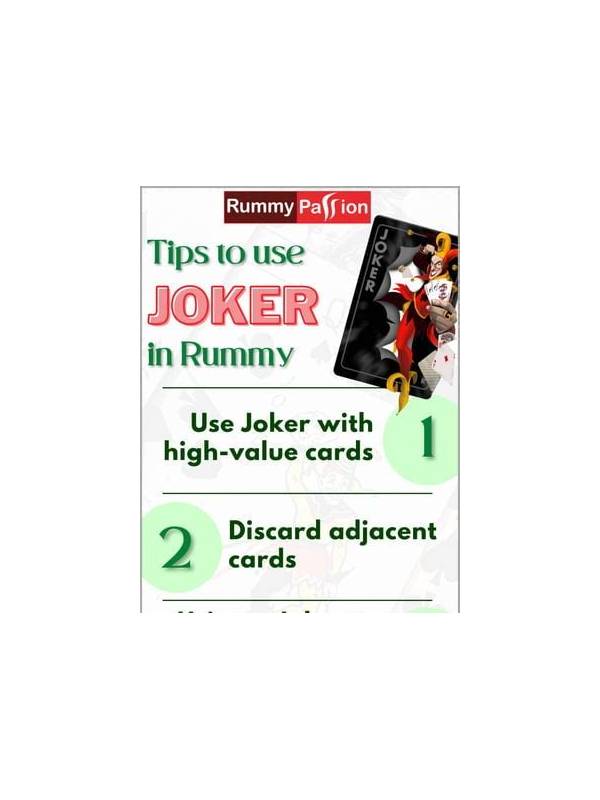
Rummy Joker Management: Keep Flexibility Under Control

A joker can connect a difficult group, reduce points, or complete a sequence. Its flexibility is valuable precisely because it can serve several roles, so using it immediately is not always best. Joker management begins by asking what the rest of the hand can do without it.
First identify whether a pure sequence is still missing. If a joker can complete a non-pure group but a natural-card sequence is available through another route, reserve the joker while building that pure sequence. A valid declaration generally depends on structural requirements, and a hand full of attractive joker combinations can still be incomplete.
Next compare the joker’s possible jobs. It might stand for one exact missing card in a nearly complete run, or it might transform two high-point cards into a useful set. Prefer the role that solves a constraint rather than the role that merely makes an already-good group look nicer. Keep track of the natural cards supporting the arrangement so you do not count the same card twice.
Jokers can also create false confidence. When a hand contains several of them, a player may hold expensive unrelated cards for too long. Recheck the total point exposure after every draw. If a joker can reduce the risk of a stranded king or queen, that may be more practical than waiting for a perfect sequence.
Do not assume every app uses identical joker rules. Some formats distinguish printed jokers from wild jokers, and table rules can define how an invalid declaration is scored. Read the format information before play and confirm how a joker may be used.
The goal is not to save every joker until the final turn. The goal is to spend flexibility where it changes the hand’s structure or safety most. A deliberate joker decision leaves a clear explanation: it created a required combination, reduced meaningful risk, or improved the path to a valid declaration. When reviewing the hand afterward, ask whether the joker was used because of a rule requirement or because the completed shape looked satisfying. Those are different reasons. A visually neat group may not lower the penalty or improve the declaration. Also note the timing: a joker used early may have opened several draws, while a joker kept too long may have left high cards exposed. This review is not about assigning blame. It is a way to learn which flexible choices actually changed the hand.
Related Post
Rummy Comparison: Keeping Pairs Versus Keeping Connectors
Pairs and connected cards offer different kinds of potential, so compare their routes instead of [...]
Rummy FAQ: Why Does a Hand Need a Bottleneck Review?
A bottleneck review identifies the one requirement most likely to delay an otherwise promising rummy [...]