Rummy Guide: Convert a Complicated Hand Into Three Questions
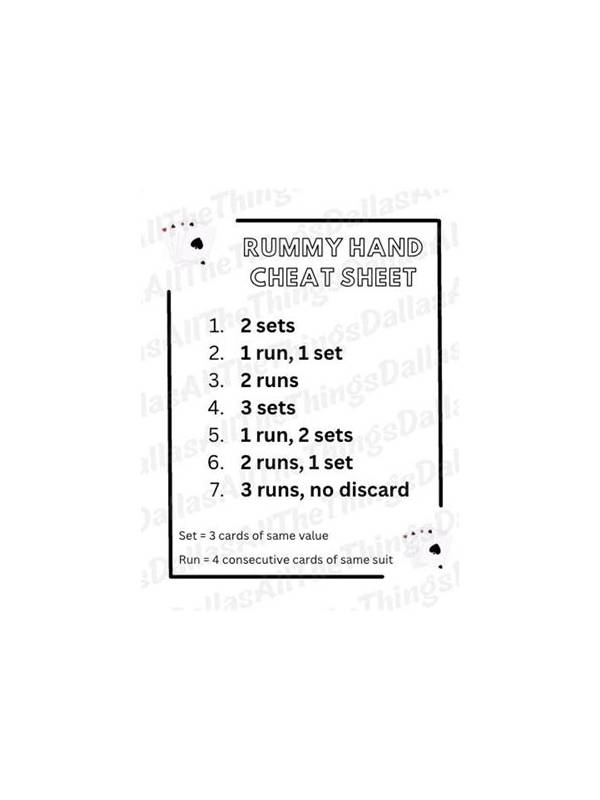
When a rummy hand feels crowded, more analysis can create more confusion. Reduce the position to three questions: what is already safe, what is closest to useful, and what must leave soon? The questions create a practical order without requiring a complete prediction.
First, identify what is already safe under the current rules. This may be a confirmed sequence, a valid set, or a structure that clearly supports the required declaration. Do not call a group safe merely because its cards look related. Check the actual rule and keep the missing requirement visible.
Second, find what is closest to useful. Look for the group that needs the fewest realistic improvements and does not compete heavily with your safe structure. A pair that needs one exact rank may be less close than a connector that accepts several adjacent cards. “Closest” means supported by evidence, not simply attractive.
Third, decide what must leave soon. Consider disconnected cards, expensive cards without a backup role, and ideas that have reached an exit condition. If several cards qualify, release the one that damages the fewest plausible routes. This question prevents old plans from occupying space indefinitely.
After a draw, ask the same three questions again. The answers may change even if your planned discard does not. Keep the wording consistent so you can review whether your decisions followed the evidence or drifted toward a favorite pattern.
This method is useful for beginners because it replaces a large search with three manageable checks. Experienced players can use it as a reset when a hand becomes emotionally or visually noisy. Clear questions do not guarantee a good draw, but they make the decision explainable and easier to improve.
You can use the questions verbally during a slow practice hand and silently during a timed hand. If the table is moving quickly, shorten them to “safe, close, leave.” That shorthand preserves the order while reducing delay. Afterward, expand the notes and check whether your quick answers matched the actual structures in the hand. If you cannot answer one question, treat that uncertainty as information: slow down if possible, or choose the action that keeps the most defensible route open. That choice may not produce the fastest-looking hand, but it gives you a clear basis for the next review.
Related Post
Rummy How-To: Handle Conflicting Signals in the Discard Area
A disciplined method helps players interpret mixed discard signals without treating one visible card as [...]
Rummy Comparison: One-Card Improvements Versus Two-Card Improvements
A one-card improvement is faster, but a two-card route may be safer when it offers [...]