Rummy Guide: Use a Baseline Hand Before Testing a Strategy
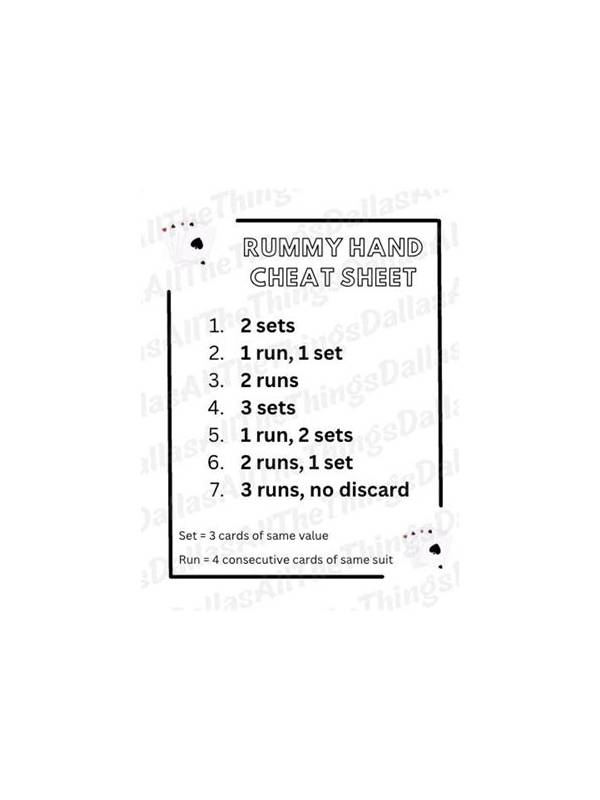
New strategies are easy to overrate after one successful hand. A baseline hand creates a stable starting point for practice. Instead of asking whether an idea “works,” you can compare how it changes your choices, errors, and recovery options.
Choose a simple, repeatable setup. You can use a fixed sample hand, a written deal, or a small set of random hands selected before practice. Record the variant rules and the objective. Keep the setup consistent for several trials, but do not treat the outcome as a prediction of real play. The baseline is a learning instrument, not a promise of a win.
Before testing a new idea, solve the hand using your normal routine. Write the opening groups you notice, the first discard candidates, and the point at which you would abandon an unproductive plan. This gives you a reference for comparison. Then apply only one change, such as ranking cards by connection count or setting a deadline for a narrow draw.
Measure process details. Did the method reduce the number of unresolved groups? Did it make the discard easier to explain? Did it preserve a backup route? Did it create extra hesitation or encourage you to keep a card after its useful window had closed? These measures are more informative than whether the simulated hand happened to complete.
Repeat the test with small variations. Move one card, change the order of a draw, or hide a piece of information if the real table would not reveal it. If the strategy works only in one carefully arranged example, call it a special case. If it remains useful across several shapes, add it to your general checklist in a short form.
Keep the record neutral. Write “the deadline prevented three speculative turns” rather than “the strategy saved the hand.” Note uncertainty and rule assumptions. Never use a practice baseline as a reason to increase stakes or extend a session. Its purpose is to improve the quality of your next decision. A reliable baseline turns strategy testing into an experiment you can review, not a story built around a single result.
Change the baseline only deliberately. If you alter the hand, format, and time limit at once, you will not know which change mattered. Keep a small header with the rules, test question, and trial number. Stop when the exercise becomes repetitive or frustrating; exhaustion changes the quality of comparison. A useful result may be that the proposed idea adds no benefit, which prevents a clever-looking method from becoming an unnecessary habit.
Related Post

Rummy How-To: Build a Practice Hand With a Deliberate Flaw
A practice hand with one deliberate flaw can train you to recognize pressure, hidden dependencies, [...]
Rummy How-To: End a Session With a Clean Digital Reset
A short digital reset after playing can protect privacy, attention, and the boundary between game [...]