Rummy FAQ: Can an Incomplete Sequence Be Valuable?
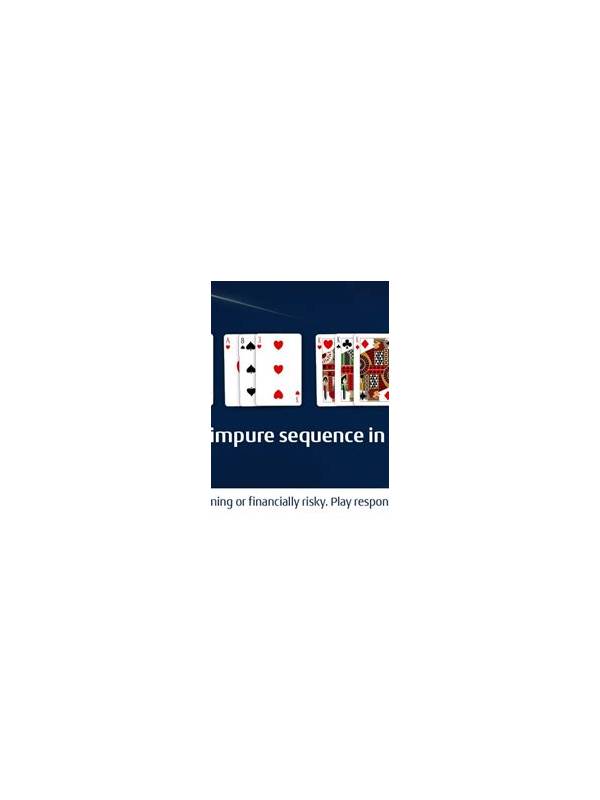
Yes, an incomplete sequence can be valuable, but adjacency alone is not enough. Its value depends on how many legal cards improve it, whether those cards are realistically available, and what you must give up while waiting. A promising shape is an option, not a guarantee.
First identify the improvement pattern. An open-ended sequence may accept cards on either side, while an inside gap may have only one rank that completes it. The exact rules and available suits still matter. Count the legal improvements rather than describing the hand as “almost complete.”
Next compare the sequence with alternatives. A pair may support a set and a sequence, while two connected cards may compete for the same missing rank. Keep the route with the better combination of improvement breadth and hand safety. Do not preserve an incomplete sequence if it forces you to carry several expensive, unrelated cards.
Public information changes the assessment. Cards already discarded or exposed may reduce the practical value of a route. This is not proof that the needed card is impossible; it is a reason to shorten the waiting period or establish a release condition. If no improvement arrives after that point, switch deliberately.
Jokers can alter the calculation, but they also have opportunity cost. A joker that completes one group may be more useful as a flexible substitute elsewhere. Before using it, ask what problem it solves and what options disappear.
The best question is not “Is this sequence good?” It is “What evidence would make me keep or release it?” If you can answer that before the next draw, the incomplete sequence has a manageable role. If you are keeping it only because completion would feel satisfying, it is probably controlling the plan instead of serving it.
Use a simple waiting audit before each additional draw. State the number of distinct legal improvements, the cards you are carrying while waiting, and the point at which you will release the route. If the answer to any of these is unknown, the sequence is not yet being managed well enough to deserve special treatment. A short sequence with two broad improvements may be safer than a longer-looking sequence with one exact requirement. Conversely, a route with many theoretical outs may still be poor when those outs create awkward leftovers. Value is therefore relative to the whole hand. The sequence earns its place when it improves the plan, not merely because it looks close to completion.
Related Post
Rummy How-To: Make a Decision Log After Each Practice Hand
A small post-hand log can turn ordinary rummy sessions into focused practice. [...]
Rummy FAQ: How Can a Quiet Turn Still Help?
A neutral draw changes your information or options without immediately improving a complete meld. [...]