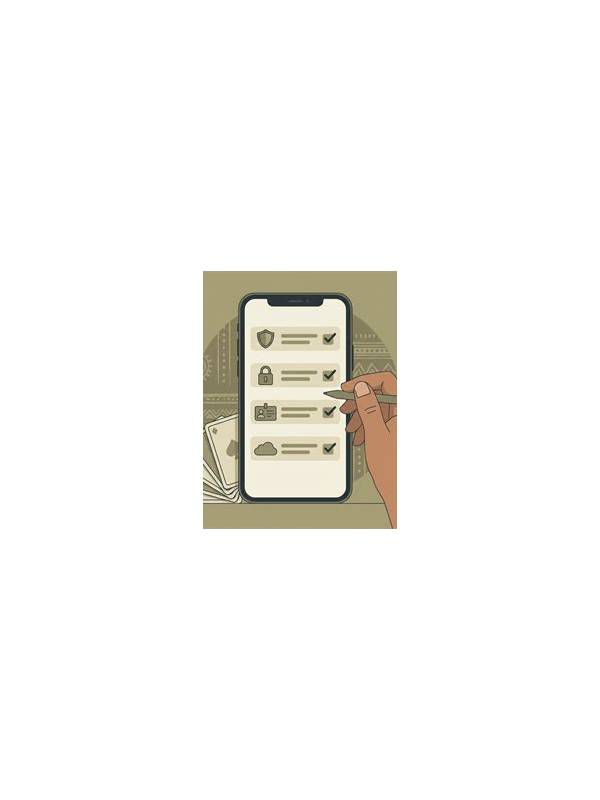
Rummy Guide: Use Questions to Avoid Automatic Discards
Automatic discards happen when a player follows a visual habit instead of evaluating the current hand. The solution is not to overthink every turn. It is to ask a few consistent questions that expose the card’s role before it leaves.
Start with: “What does this card currently do?” It may complete a group, connect two routes, lower an awkward total, or contribute nothing. State the role plainly. If the answer is only “it might help,” ask the next question: “How many realistic routes does it have?” One exact route is different from several live connections.
Then ask: “What would I break by discarding it?” A card can look loose while supporting a nearby pair or a flexible sequence. Move it mentally out of the hand and see which groups lose options. This question is particularly useful when cards are sorted by suit, because a bridge may be visually separated from the groups it serves.
Next ask: “Is there a cheaper alternative?” If two cards contribute similarly, compare point cost and flexibility. Discarding the card with fewer routes is usually reasonable, but protect a high card when it is the only support for a required structure. The comparison should be between roles, not just between numbers.
The final question is: “What evidence would change my mind?” If the answer is a particular arrival, give the plan a review point. If no new evidence would make the card useful, the card may be ready to leave. This guards against keeping an option simply because it has not been formally disproved.
Keep the questions short enough for live play. You do not need to narrate them aloud, and you do not need perfect certainty. Their purpose is to create a pause between seeing an awkward card and clicking discard. With repetition, the questions become a quick internal checklist.
Review the checklist after a session. If one question repeatedly reveals mistakes, emphasize it next time. Perhaps you overlook bridge cards, or perhaps you protect narrow pairs too long. The questions can evolve with your experience while preserving the same goal: make each discard a current decision, not a reflex inherited from the previous turn. The questions are also useful after a mistake. Revisit the turn and ask which question you skipped. This creates a specific correction for the next session, such as checking bridges before discarding or setting a deadline for a narrow route. Specific corrections are easier to remember than general promises.
Related Post
Rummy Guide: Use a Counterfactual Discard Test
Compare a discard with its alternatives by imagining the next turn instead of defending the [...]
Rummy Comparison: Flexible Connectors Versus Extra Pairs
Flexible connectors and extra pairs solve different rummy problems, so compare their routes rather than [...]