Rummy Rule Translation: Turn Written Rules Into Table Actions
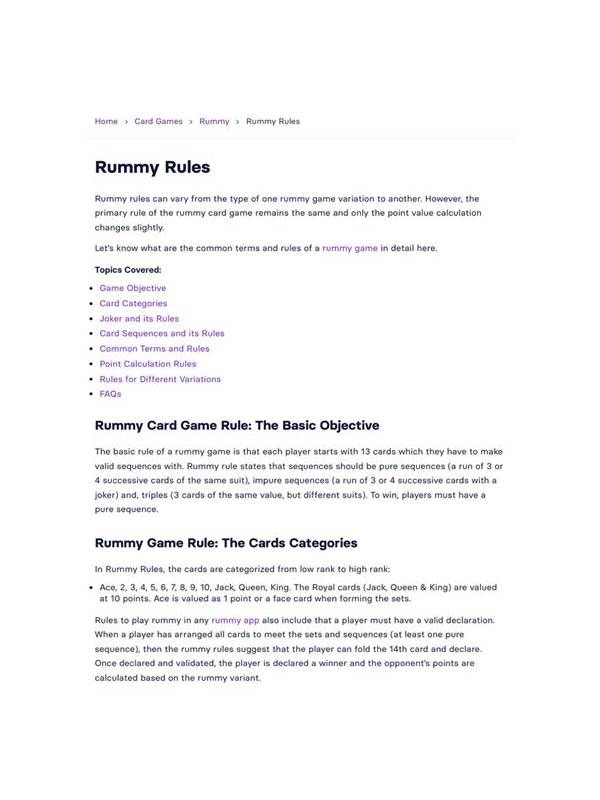
Reading a rummy rule is different from applying it under time pressure. A rule may say that a valid declaration needs particular groups, but the table decision is to inspect each group, confirm card use, and check the required sequence conditions. Rule translation turns general language into observable actions so fewer details are lost when the hand becomes complicated.
Start with a rule sentence and ask, “What would I need to see on the table?” For a sequence requirement, the answer may be same-suit order and uninterrupted ranks. For a set requirement, it may be matching ranks with distinct suits, depending on the format. Write the visual test in your own words, then compare it with the official wording. This reveals assumptions that ordinary shorthand can hide.
Next, attach the test to a moment. Some checks belong before joining a table, such as scoring, entry conditions, and timing rules. Others belong after every draw, such as whether a card is being counted twice. Final declaration checks should be separate from strategy checks. A clever route cannot repair a structure that fails the format’s basic requirements.
Avoid copying a rule from one variant into another. Similar names can use different scoring or declaration details. Keep a small variant card with the format name, group requirements, penalty system, and any special joker treatment. If a point is unclear, pause and verify it through the platform’s official rules or support channel before relying on it.
Practice translation with examples that fail. Construct a hand that looks complete but contains a duplicated card role, an invalid sequence, or an unaccounted joker. Explain exactly which visual test catches the problem. Failed examples are useful because they train inspection rather than recognition. When rules become actions, you gain both accuracy and a calmer final review.
Keep your translated checklist short enough to use under normal conditions. A long document may be excellent for study but impractical during a turn. Separate “before joining,” “during play,” and “before declaring” checks. This organization reduces the chance that you search for a scoring rule while trying to inspect a sequence. Translation succeeds when the right check appears at the right moment. Translation succeeds when the right check appears at the right moment.
Review the checklist whenever the platform introduces a new format or feature. Small wording changes can alter a practical action, and an old shortcut may no longer be safe.
Related Post
Rummy Rules Questions to Settle Before Your First Table
These rule checks help new players avoid confusion when joining an unfamiliar online rummy format. [...]
Rummy Joker Decisions: Three Questions Before You Keep One
A practical way to judge a joker by the opportunities it creates rather than by [...]