Rummy Rules Questions to Settle Before Your First Table
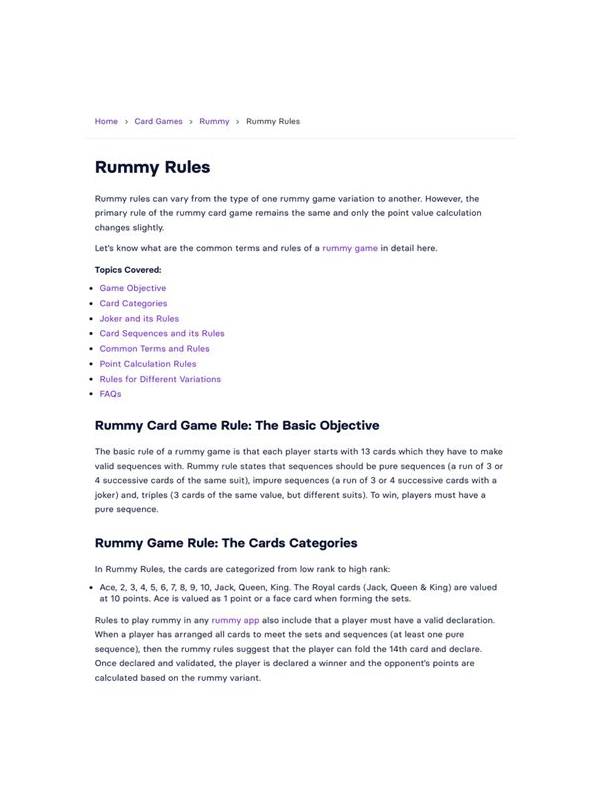
Before joining an unfamiliar rummy table, spend a moment confirming the rules that can change both strategy and scoring. Similar labels do not always mean identical formats, and a confident assumption can be more expensive than a short read of the help screen.
Ask how many cards are dealt and how many players can join. The hand size influences the number of possible groups and the speed of the table. Confirm whether the game is points, pool, or deals rummy, and learn what ends a round. A deal-based table may reward a different risk level from a single points hand.
Check the declaration requirement carefully. Many Indian rummy formats require a pure sequence and additional valid groups, but the exact conditions and invalid-declaration penalty should be visible in the rules. Find out whether a set can use a joker, how many jokers may be present, and whether a printed joker or wild joker has special treatment.
Understand the draw and discard sequence. Some interfaces make the current discard prominent, while others place it beside the closed deck. Learn what happens if you touch the wrong pile, whether an action can be undone, and how much time is allowed for a turn. A quick practice round can prevent an expensive interface mistake.
Read the scoring section for maximum loss, entry fee, service charges, and withdrawal conditions if money is involved. Do not assume that a displayed bonus is cash, or that a promotion has no turnover or expiry conditions. Check age, location, and identity requirements, and avoid using a service whose legality or safety you cannot verify.
Finally, confirm how to report a technical problem and where to find responsible-play controls. Set your own limit before joining. Rules knowledge will not remove variance, but it lets you judge a hand on its actual decisions. If a table’s terms remain unclear after checking the official support material, choose a free practice option or wait.
Keep a screenshot or note of important terms only when doing so is safe and lawful, and avoid storing personal documents in a casual folder. The goal is to know what you agreed to, not to collect unnecessary data. Clear rules and clear limits should come before speed or promotions.
Related Post

Rummy Guide: Track a Hand With Three Confidence Levels
Three confidence levels make it easier to distinguish established groups from attractive but uncertain possibilities. [...]
Rummy How-To: Mark Cards by Role Instead of Suit
Sorting cards by strategic role can reveal stronger rummy options than arranging them only by [...]