Rummy How-To: Use a Delayed Decision for Ambiguous Cards
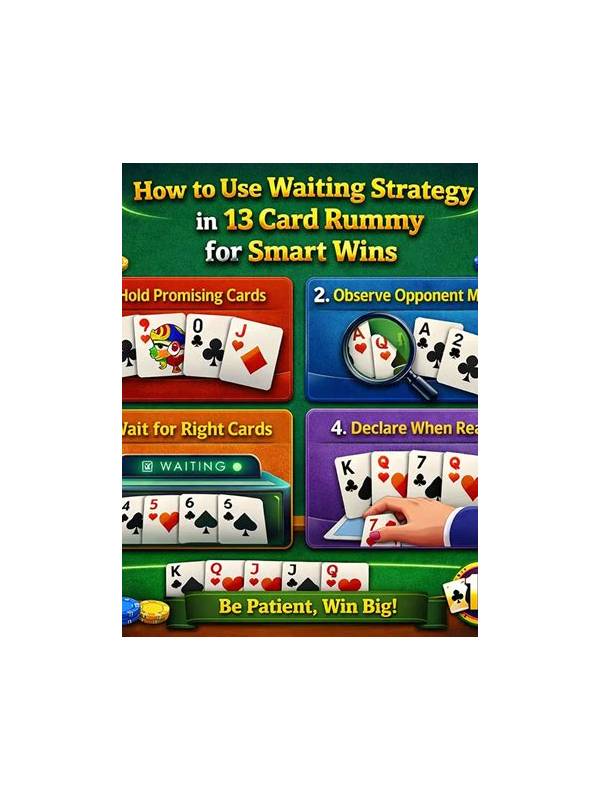
Not every card needs an immediate permanent role. When two arrangements look similar and neither has strong evidence, a delayed decision can protect flexibility. This does not mean refusing to choose forever. It means keeping the card available while you wait for one useful piece of information.
Identify the ambiguity first. Perhaps a pair could become a group, or one card fits two possible sequences. Write the alternatives mentally as Route A and Route B. Then ask what future event would distinguish them: a visible discard, a helpful draw, or a change in the remaining hand. If no event would clarify the choice, delaying may only postpone a necessary judgment.
Give the delay a limit. One turn is often enough for practice, while a rapidly changing hand may require a shorter limit. At the end of the window, compare the routes again using current evidence. Do not allow the original arrangement to remain simply because it was first. A delayed decision is a scheduled review, not an excuse to avoid releasing a weak card.
Protect your downside during the delay. Avoid adding more cards to a route that is still unproven. Keep at least one card that can serve a broader purpose, and do not let a high-point card become invisible just because it is attached to a possible sequence. If the delay creates too much exposure or leaves the hand cluttered, simplify sooner.
This method is especially useful for beginners who re-sort repeatedly. The pause creates a clear boundary: observe, wait for a defined clue, then decide. It can also help experienced players when a recent loss makes every option feel urgent. A short delay restores a process without pretending that uncertainty has disappeared.
Review whether the delay produced better information. If it did, note what changed and whether the final choice improved. If nothing changed, the lesson may be to choose more quickly next time. The aim is not to maximize waiting. It is to spend waiting only when the expected information is worth the flexibility you preserve. Review whether the delay produced better information. If it did, note what changed and whether the final choice improved. If nothing changed, the lesson may be to choose more quickly next time. The aim is not to maximize waiting. It is to spend waiting only when the expected information is worth the flexibility you preserve.
Do not confuse a delayed decision with delaying a required action. If the timer is short, the rules require a discard, or a card carries an obvious cost, complete the necessary step and keep the later review for the next turn. Practice first in a slower setting.
Related Post
Rummy FAQ: How Should You Handle a Useful but Risky Discard?
A useful discard can be worth taking when its benefit is clear and its signaling [...]
Rummy Card Memory Exercise for Sharper Discard-Pile Awareness
Try a short offline exercise to improve recall of visible cards without pretending to know [...]