Rummy How-To: Practice Declaring With a Verbal Checklist
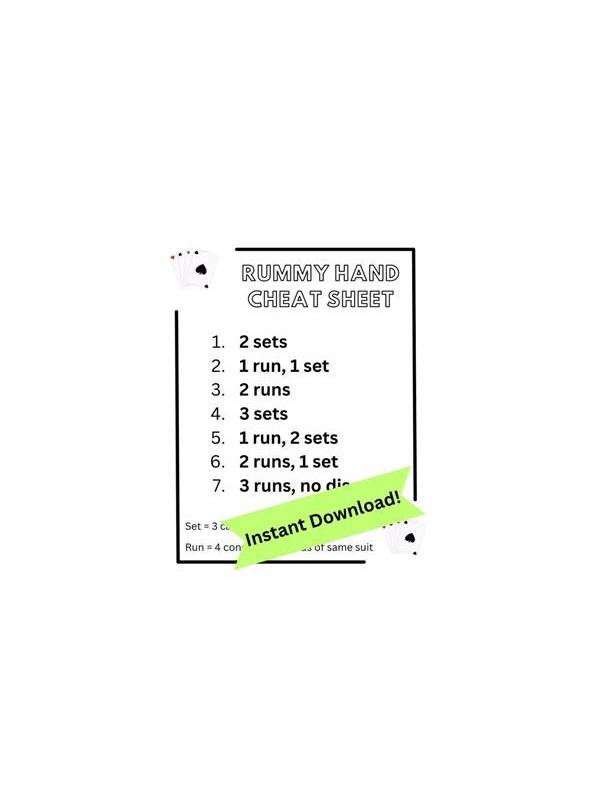
Declaring a rummy hand requires more than noticing that several cards look grouped. You need to confirm that the groups satisfy the variant’s rules and that every card is used exactly once. A verbal checklist is a simple practice tool for building that habit.
Begin by naming the format and its declaration requirements. Different games may require a certain number of sequences, a pure sequence, or other conditions. Read the current rules if you are unsure. Do not use a checklist as a substitute for the platform’s official instructions.
Next, point to each proposed group and say what it is: “same-suit sequence,” “sequence using a permitted joker,” or “same-rank set.” Keep the description factual. If a group depends on a joker, state which card the joker represents and verify that the substitution is allowed. If the group has a gap, stop and investigate instead of smoothing over the problem.
After labeling the groups, count the cards. Compare the total with the hand size for the format. Check that no card appears in two groups and that no card has been left outside. This catches a common mistake: building a convincing sequence in the mind while quietly reusing one card elsewhere.
Finally, confirm the action itself. Are you selecting the correct declaration control? Is the timer still active? Has the hand changed since you began checking? In practice, simulate the final click only after the grouping is complete. If you are playing for money, use extra caution and stop if the interface is confusing.
Speak softly or use an internal version when playing with others. The point is to make the sequence of checks automatic, not to reveal private thinking. After practice, record only the mistake pattern, such as “forgot to count the unused card.”
The checklist is short: name the rules, label each group, verify substitutions, count every card, and confirm the action. Repeating the same order helps make declaration a careful procedure rather than an impulse. Practice the checklist with deliberately imperfect examples. Create a hand with one valid sequence, one invalid group, and one unused card. Say the checks in order and identify the first failure. Then rearrange the hand and repeat. This teaches you to inspect evidence rather than accept a layout because it looks tidy. With repetition, the same routine can become a quick final safeguard. The checklist also works for teaching. A new player can explain one group at a time while a partner asks only the next checklist question. This keeps corrections specific and avoids overwhelming the learner with every possible rule. Over time, the learner can perform the check independently and ask for help only when a rule is genuinely unclear.
Related Post

Rummy Safety: Protect Your Account and Device During Play
Basic device and account habits can reduce avoidable problems when using a rummy app. [...]
Rummy FAQ: What Should You Do With a Stranded High Card?
A stranded high card needs a timing decision based on connections, table information, and risk. [...]