Rummy Guide: Read the First Discard as a Baseline
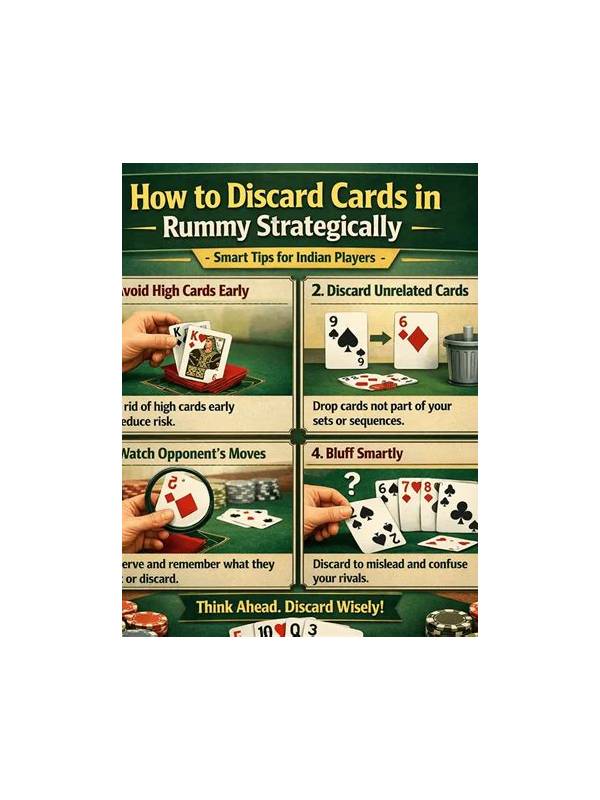
The first discard in a rummy hand is easy to overlook because little information seems available. It can still establish a useful baseline. You can note its suit, rank, and apparent role, then compare later decisions with that starting point. The purpose is not to predict the entire hand. It is to create a neutral reference before the table becomes busy.
Begin by reviewing your own cards before interpreting the discard. Identify complete groups, likely connectors, and expensive isolated cards. Then ask whether the first discard improves any opponent’s visible options. A card that completes an obvious sequence may be more relevant than a card with no clear neighborhood. Still, keep the conclusion modest: one player may take a card for several different reasons.
Record the opening discard mentally or in a permitted private note. If a similar card appears later, compare the context rather than treating the two events as identical. Early in a hand, players often release cards freely because many routes remain open. Later, a matching discard may carry more information because the hand has become narrower.
Use the baseline when evaluating the discard pile. If a rank was available from the beginning and nobody selected it, that does not prove it is useless. It may have been hidden in a different hand, or players may have prioritized other routes. The observation becomes more useful when combined with your own needs and several turns of public evidence.
The baseline also protects against hindsight. After a hand ends, compare your first interpretation with what actually happened. Did you treat an ordinary discard as a strong signal? Did you ignore a simple clue because it looked unimportant? Write one sentence about the difference. The exercise trains attention without turning every move into a puzzle.
Remember that the first discard is context, not a command. Keep your hand organized around legal groups and practical exits. Let public information change a close decision, but do not abandon a strong private structure merely because an early card seems meaningful. A calm baseline makes later evidence easier to weigh.
If the first discard directly solves a problem in your hand, evaluate it normally before treating it as information. A useful card is still useful even when it is public. If you pass on it, note the concrete reason: penalty, competing route, or lack of time. This keeps the baseline connected to action rather than turning it into a separate exercise in observation.
Related Post
Rummy Communication Tips for Friendly Private Tables
Keep private rummy sessions clear, fair, and enjoyable with simple communication habits. [...]
Rummy Comparison: Manual Notes Versus Memory at a Mobile Table
Comparing memory with brief manual notes shows when recording visible information can improve mobile rummy [...]