Rummy How-To: Test a Sequence Before Holding It
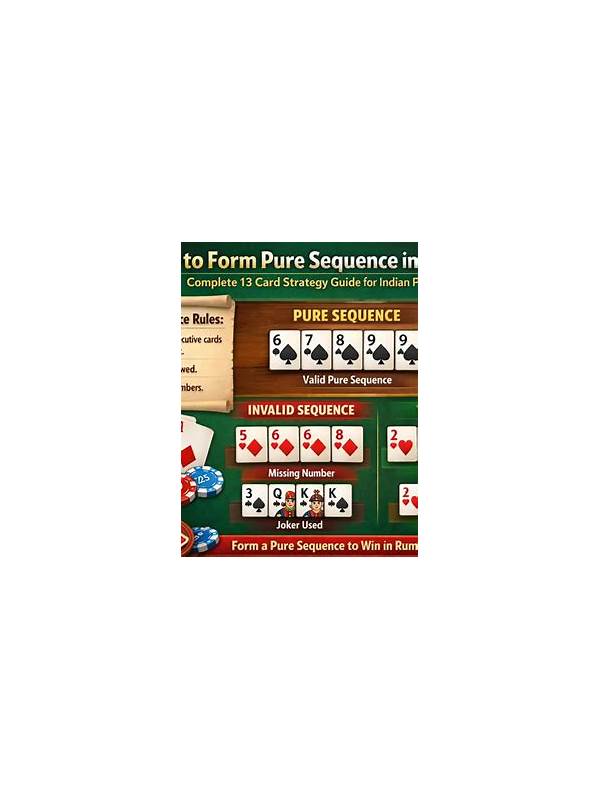
A possible sequence often feels more valuable than it really is. Two connected cards may be useful, but holding them without checking their route can leave the rest of the hand crowded. A simple test helps you decide whether the connection deserves space.
First, name the exact cards that would complete the sequence. If you have 7 and 8 of a suit, ask whether a 6, 9, or both are usable under the rules of the variant. If the route requires one exact card, call it narrow. If several cards can complete or extend it, call it open. This language is more useful than saying a combination “looks good.”
Second, check whether the cards serve another confirmed purpose. A card in a pure sequence should normally receive protection, while a card in a speculative route should compete with other needs. If one of the two cards is a high-value outsider in every other arrangement, keeping the pair may carry a larger cost than it first appears.
Third, compare the route with the best alternative in the hand. Suppose a pair supports an inside sequence, while another card can join a wider sequence with two possible ranks. You do not have to discard the pair immediately, but you should notice that the alternatives are not equal. Estimate how many turns you are willing to wait before reassessing the narrow route.
Fourth, consider the discard signal. In a live game, another player may take a card from the discard pile, but that action is not proof of a complete sequence. Treat public information as a clue with uncertainty. Your own hand remains the primary evidence. Avoid building an elaborate theory around one visible discard.
After the test, assign the sequence a status: active, protected, or provisional. Active means it is currently the best route. Protected means breaking it would damage a confirmed requirement. Provisional means it stays only while the next few draws remain helpful. Review the status after each meaningful draw. A sequence is a plan, not a possession. Testing it before holding it lets you keep useful connections without allowing them to dictate every later choice.
This test is also useful when a fresh card appears in the discard pile. Ask whether taking it improves a route you have already described, or merely looks familiar. If you cannot state the improvement in a few words, leave the option uncommitted. Every held connector should have a reason, a reasonable improvement path, and a time when you will review it.
In a review, distinguish what you knew from what you learned later. Public cards, table messages, and the rules page are evidence only when they were visible before the choice. This habit keeps practice fair and makes the lesson transferable. A compact note about the decision, the available alternatives, and the next checkpoint is enough to guide the next session without turning a single hand into a fixed rule.
Related Post
Rummy How-To: Build a Personal Error Taxonomy
Categorizing mistakes turns vague disappointment into specific practice targets. [...]
Rummy Discard Pile Signals Without Overreading Them
The discard pile offers useful clues, but disciplined observation is safer than assuming you know [...]