Rummy FAQ: Can a Joker Hide a Weak Structure?
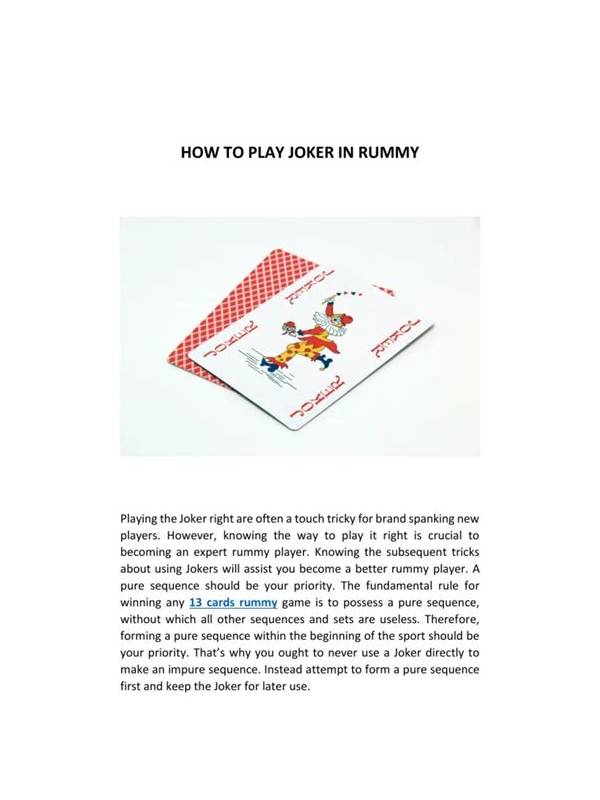
Can a joker hide a weak rummy structure? It can make a hand look more complete than it is, especially when the joker fills an obvious gap. The card may be genuinely useful, but its presence can also delay the recognition that the remaining groups are narrow, unsupported, or invalid under the chosen variant.
Begin by removing the joker mentally. Look at the natural cards and ask what they accomplish without assistance. If they contain a pure sequence or a strong natural set, the joker is an addition to an existing structure. If almost every proposed group needs the joker, the hand may have too few firm foundations. This does not mean the joker is bad; it means its flexibility needs careful allocation.
Check the rules before evaluating the arrangement. Variants differ in how jokers substitute, whether a printed joker has a special role, and what a valid declaration requires. A group that appears acceptable on screen may not satisfy the local rule set. Read the table information or help page when the wording is unclear, and avoid relying on a memory formed from another game.
Then compare possible uses. A joker can often rescue a difficult sequence, complete a set, or preserve a high-value card from being discarded. Prefer the use that creates a firm requirement while leaving natural cards available for other groups. Do not spend it merely because it makes the display look tidy. A tidy arrangement is not necessarily a legal or efficient one.
Ask one final question: what would happen if the next draw brought no help? If the joker-supported route still leaves a reasonable discard and a clear next priority, it may be sound. If the entire hand depends on finding one particular natural card, mark the route as fragile and set a reassessment point.
The practical answer is simple: a joker can cover a gap, but it cannot remove uncertainty. Keep track of which groups are natural, which depend on substitution, and which remain only ideas. That distinction makes the joker a deliberate tool instead of a reason to ignore a weak structure.
During practice, mark joker-dependent groups with a small symbol. At the end of the hand, compare marked groups with natural groups. This reveals whether you overvalue substitution or use it to protect the right requirement. Keep the review descriptive: two routes depending on one joker is more useful information than a vague judgment about playing badly.
In a review, distinguish what you knew from what you learned later. Public cards, table messages, and the rules page are evidence only when they were visible before the choice. This habit keeps practice fair and makes the lesson transferable. A compact note about the decision, the available alternatives, and the next checkpoint is enough to guide the next session without turning a single hand into a fixed rule.
Related Post
Rummy Beginner Mistakes: Build a Personal Warning List
Rummy Beginner Mistakes: Build a Personal Warning List offers practical guidance for clearer, safer, and [...]
Rummy How-To: Turn a Messy Hand Into Three Candidate Plans
A quick sorting method helps you compare possible hand shapes before you chase the first [...]