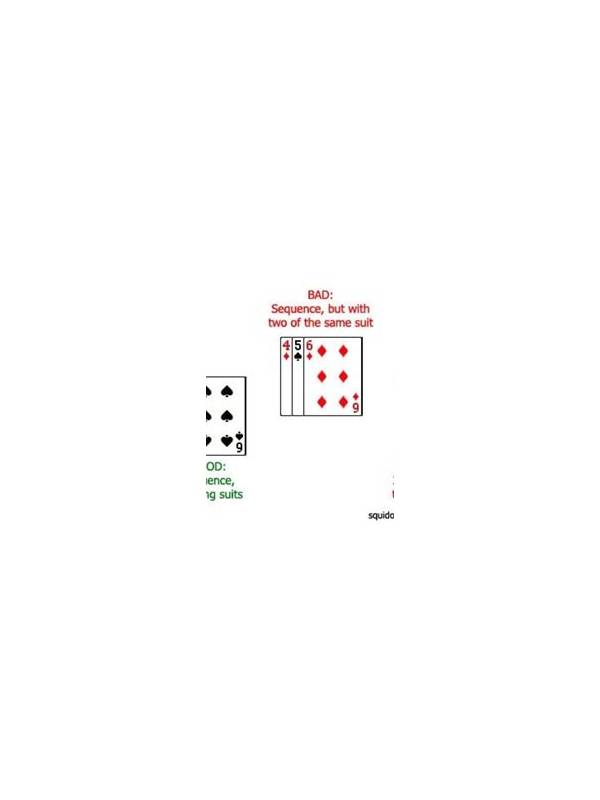
Rummy FAQ: What Is an Unfinished Sequence?

What is an unfinished sequence in rummy? It is a group of cards that could become a legal sequence if one or more suitable cards arrive. For example, two consecutive cards of the same suit may be a useful connection, but they are not a completed sequence yet. Describing the difference clearly prevents a plan from being mistaken for a result.
Start by listing the missing cards. A two-card run may accept a card on one side, the other side, or both, depending on its ranks and the variant’s sequence rules. A gap between two cards can be narrower because it may need one exact rank. The number and location of missing cards tell you more than the visual neatness of the group.
Next, ask whether the sequence is pure. If a joker or wild card is being used, mark that dependency. Many Indian rummy formats require at least one pure sequence for a valid declaration, but local rules and table instructions should be checked. A joker-supported group can be helpful without satisfying a pure-sequence requirement.
Consider the opportunity cost. The cards in an unfinished sequence cannot be used elsewhere while you hold them. If they also support a set or another sequence, they may be worth keeping temporarily. If they are isolated from every other plan, give the route a deadline. A possible group should earn its place by remaining reasonably improvable.
Finally, check its timing. Early in a round, an open-ended route can justify patience. Later, the same route may be too slow if it still needs several specific cards. Reassess after each draw rather than assuming the original evaluation remains correct.
An unfinished sequence is neither automatically strong nor automatically disposable. It is a conditional plan. Label it by its missing cards, purity, breadth, and deadline. That compact description helps you compare it with complete groups and make a discard decision based on evidence instead of on the promise of a tidy future hand.
Saying unfinished, open at both ends, no joker, and two turns old is more precise than saying you almost had a sequence. Precision exposes the actual trade-off and lets another player discuss the reasoning without guessing what you saw. It also makes later practice notes easier to compare.
In a review, distinguish what you knew from what you learned later. Public cards, table messages, and the rules page are evidence only when they were visible before the choice. This habit keeps practice fair and makes the lesson transferable. A compact note about the decision, the available alternatives, and the next checkpoint is enough to guide the next session without turning a single hand into a fixed rule.
Related Post

Rummy FAQ: Can Rearranging Change Your Strategy?
Rearranging cards does not alter the deck, but it can change what you notice and [...]
Rummy Comparison: Manual Notes Versus Memory at a Mobile Table
Comparing memory with brief manual notes shows when recording visible information can improve mobile rummy [...]