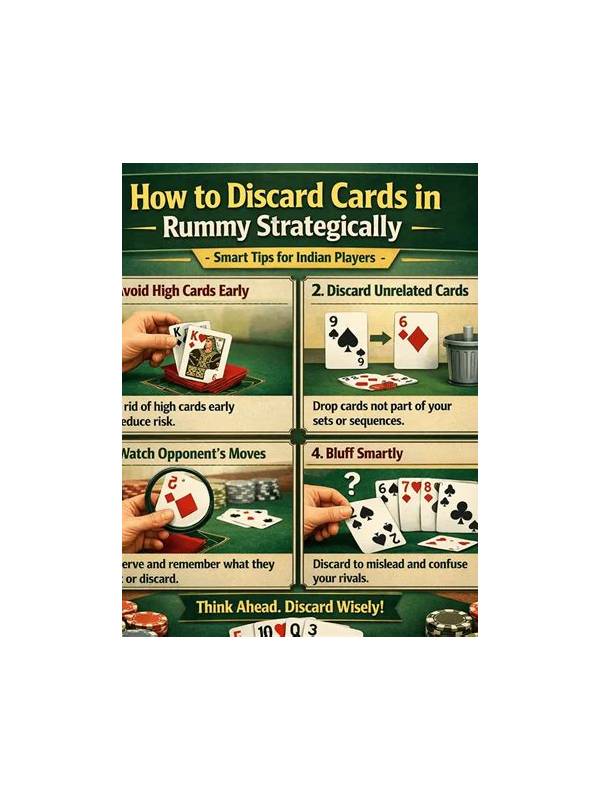
Rummy Tips: Plan Around the Most Expensive Leftovers

Players often focus on the group they hope to complete and forget the cards that will remain if the plan fails. Expensive leftovers deserve attention from the beginning. Planning around them does not mean discarding every high card immediately; it means knowing what risk you are accepting while building the hand.
First, identify unmatched cards with the greatest penalty under your format. Then ask whether each one has a realistic role in a sequence or set. A high card beside a flexible connector may be worth holding briefly. A high card with no partner is more urgent, especially when it cannot join a pure sequence or when few turns remain.
Compare the cost of keeping a card with the cost of releasing it. A discard can help another player, but holding an expensive card can harm you directly if the hand closes soon. Use the visible discard history as one clue, not as proof of safety. Your decision should consider the whole layout and the probability of making progress.
Create a review trigger. After every draw, check whether the expensive card gained a role. If it did not, lower its priority and look for a practical exit. Do not let the fact that you held it for several turns become a reason to keep it longer. Past investment is not evidence that the next turn will improve the plan.
The best ending is not always the most elegant arrangement. It is often the arrangement that becomes valid while leaving the fewest costly cards outside it. Practice by reviewing hands at the point where each expensive card could have been released. This builds a habit of managing downside as carefully as chasing completion.
You can practice this skill by stopping a sample hand before its final turn. List the cards that would remain under two different completion plans, then compare their penalties and flexibility. This exercise makes leftovers visible before pressure arrives. It also shows that a plan with one impressive group may be weaker than a modest plan that leaves no costly cards behind. Keep the comparison tied to the actual format and its scoring rules, because penalty values and declaration requirements are not universal.
Use the method regularly and the final inspection will feel like ordinary hand management rather than a last-second rescue.
Related Post
Rummy Comparison: Planned Flexibility Versus Accidental Flexibility
A hand is more reliable when its flexibility comes from identified options rather than from [...]
Rummy Tips: Test a Candidate Meld by Removing It
Temporarily taking a proposed group out of the hand can reveal hidden dependencies before you [...]