Rummy Guide: Turn a Confusing Hand Into Three Candidate Plans
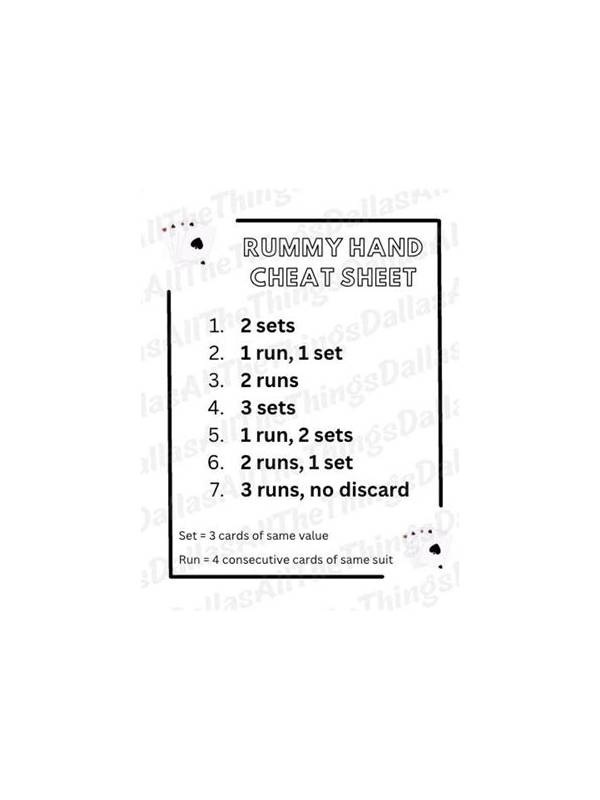
Some opening hands contain pairs, partial runs, jokers, and isolated high cards all at once. Trying to solve everything immediately creates mental noise. A better approach is to form three candidate plans, compare them briefly, and select one temporary direction.
Plan A should use the strongest confirmed or nearly confirmed groups. Start with the cards that already fit together naturally. Plan B should protect flexibility, usually by keeping bridge cards or two-way connectors. Plan C should be a cleanup plan focused on reducing point risk if the promising routes fail. These labels describe jobs, not predictions.
Write each plan in one sentence. For example: “Complete the heart run and keep the low pair,” “protect the middle connectors while seeking a pure sequence,” or “release high singles and preserve the cheapest backup.” If a plan needs a paragraph to explain, it is probably too complicated for a live turn.
Compare the plans using four questions. What does the plan already have? Which draws help it? What is the cost if those draws do not arrive? What must be discarded to keep the plan alive? The answers expose a plan that looks attractive only because it ignores its expensive loose cards.
Choose a leader for the next one or two turns. Do not treat that choice as permanent. A new card may complete a group, make a route illegal, or show that important outs are gone. When that happens, promote another candidate rather than forcing the original plan.
Keep the backup plan simple. A backup is valuable because it reduces panic, not because it predicts the future. It might mean holding lower-point cards, preserving one flexible connector, or keeping a pair until a replacement appears. If the backup itself needs too many conditions, it is another primary plan competing for attention.
After the round, record which plan led and why it changed. You are looking for decision habits: do you ignore point cost, hold narrow pairs too long, or abandon a good route after one miss? Three candidate plans create a small decision framework that is easier to review than a vague feeling that the hand was “bad.” Do not compare candidates forever. A quick inventory, a short comparison, and a temporary choice are enough. The framework is meant to reduce indecision, then make room for the next card. Good planning includes permission to change direction when the evidence changes. This keeps the hand readable even when the first few draws do not cooperate.
Related Post
Rummy Hand Reading: A Quiet Method for Tracking Useful Cards
Learn a simple way to track useful cards without trying to remember the entire table. [...]
Rummy Practice: Use Deliberate Randomness in Sample Hands
Random sample hands become more useful when each practice round tests a clearly chosen decision [...]