Rummy Comparison: Short-Term Points and Long-Term Flexibility
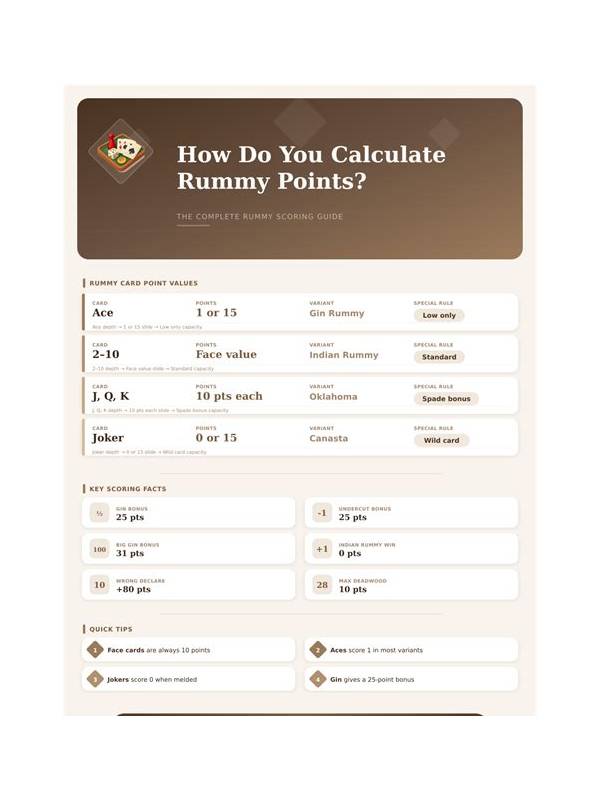
Rummy choices often involve a trade-off between reducing points now and preserving cards that could become useful later. Immediate point reduction is easy to measure. Flexibility is harder because it describes future routes. Comparing both explicitly leads to calmer decisions.
Start by calculating the immediate effect of each candidate discard or group. If releasing one high card removes a large penalty, that benefit is real. But check what remains afterward. A low-point hand with no connected cards may be safer in scoring terms yet harder to complete. A flexible hand can improve quickly but may carry risk while it waits.
For flexibility, count reasonable improvements rather than every imaginable card. A middle connector with two open ends usually has more routes than an isolated edge card. A pair may have a set route but no sequence route. A joker may support several groups, although using it in one place can remove options elsewhere.
Compare the cost of waiting. How many turns can the plan survive? If a high-point card needs one specific draw, its flexibility may be theoretical. If a lower-point structure accepts several cards and has a backup, it may justify a little patience. Give narrow plans a deadline and broad plans a review point.
The game format also matters. In a points-based round, reducing exposed points can deserve extra weight. In a longer pool or deals format, completing a legal hand or preserving a manageable future may matter more. Read the scoring rules before applying a generic priority.
When the two options tie, prefer the choice you can explain clearly. “I reduced ten points and kept my pure sequence route” is stronger than “this pair felt lucky.” Clear reasons make later review possible. They also help you notice whether a choice was based on evidence or fear of missing a draw.
Neither points nor flexibility should be treated as a single permanent ranking. Recalculate after a useful card appears, an opponent takes an open discard, or the hand enters its endgame. The practical skill is balancing what the hand costs now with what it can still become, then choosing the option with the healthier combination. Write the comparison in a tiny table during practice: immediate points, useful draws, and failure cost. Seeing the columns together prevents one attractive number from dominating. In live play, use the same three headings mentally and accept an estimate when exact calculation would slow you down.
Related Post
Rummy Guide: Use a Three-Card Horizon
A three-card horizon helps you judge immediate choices without pretending to predict the entire hand. [...]
Rummy FAQ: What Is a Useful Fallback Plan?
Understand how to keep a second route available without scattering attention across too many possibilities. [...]