Rummy Sets Versus Sequences: A Decision Guide for Beginners
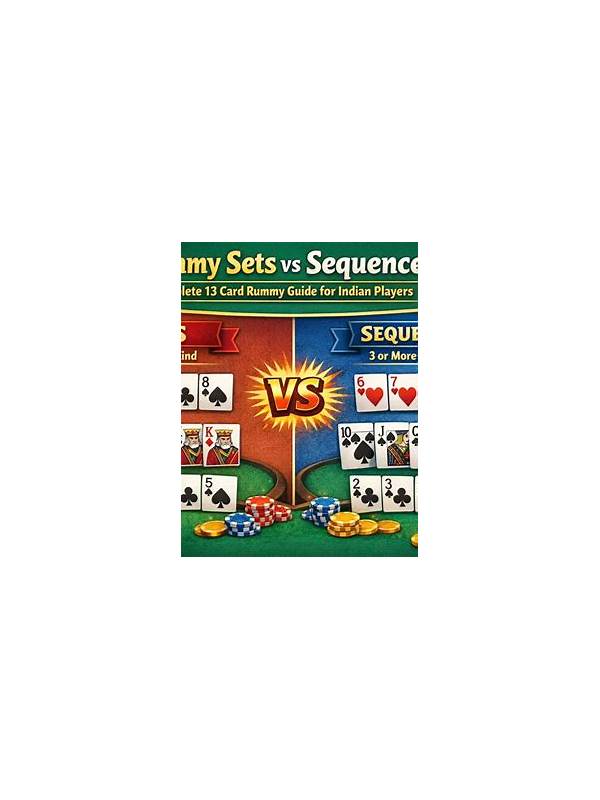
Beginners often ask whether sets or sequences are better. The answer depends on the hand and the rules, because they solve different structural problems. A set uses cards of the same rank in different suits, while a sequence uses consecutive cards of one suit. Both can be valuable, but a declaration may require a particular sequence before either group matters.
Build the required foundation
Check the format before arranging anything. In many thirteen-card Indian rummy games, at least one pure sequence is mandatory. That means a hand containing several easy sets can still be invalid. If you have connected same-suit cards, examine that route first. A set can remain a secondary plan while the foundation is secured.
Compare the cards you actually hold
Three cards of the same rank in different suits may already form a set, whereas a pair of same-suit cards needs one neighbor. Conversely, a three-card sequence may be complete while a pair of queens waits for a specific third suit. Do not compare group names abstractly. Count missing cards, check whether the cards overlap with another plan, and note whether a joker is involved.
Avoid breaking a stable group casually
A valid set or sequence provides structure. Break it only when the remaining hand gains a clear, stronger route or when the format makes the group unnecessary. A pair that could become part of a pure sequence may be more valuable than a completed non-pure group if the foundation is missing. Reevaluate after each draw rather than following a fixed preference.
Keep the ending in view
After the first required sequence is complete, look for the second sequence before filling every remaining slot with speculative sets. Then inspect loose cards and high-value points. The winning arrangement is usually the one that leaves no ungrouped cards and satisfies all declaration rules, not the one with the greatest number of one type of group.
Practice by taking one hand and writing two arrangements: a sequence-led plan and a set-led plan. Compare their missing cards and risks. This turns a broad question into a concrete decision and builds the habit of letting the hand, rules, and timing guide the choice.
Timing can change the comparison. A set that is complete now may be attractive when the clock is short, while a sequence route may be better when several connected cards are already visible. Still, never sacrifice the mandatory structure for speed. Keep enough time for a final declaration check, because a rushed tap can turn a valid arrangement into an avoidable error.
Related Post
Rummy How-To: Establish a Clear Hand State After Every Draw
A repeatable hand-state routine keeps each draw from creating confusion about groups, gaps, and discard [...]
Rummy Safety: Check Permissions Before Installing a Game App
Reviewing app permissions and installation sources is a practical step before putting a new game [...]