Rummy Guide: Explain a Rule Without Confusing New Players
Invite the learner to demonstrate the rule with a new example rather than repeating your wording. A fresh example shows whether they understand the relationship or have memorized a phrase. If the example is uncertain, return to the simplest valid and invalid pair. Keep local terminology consistent, and explain synonyms only when they appear in the platform’s interface or official rules.
Ask the learner to explain the rule back in their own words. If they can identify the requirement and reject the near-miss example, the explanation has probably worked. Correct misunderstandings without adding unrelated strategy. Introduce tactics after the player can complete the turn cycle and declaration check reliably. This builds confidence from accurate fundamentals and leaves the learner able to verify a move independently.
Explaining a rummy rule well means making it testable. A new player needs to know what the rule requires, see one valid example, and understand one common mistake. Too many exceptions at once can hide the basic idea.
Begin with the objective and the required hand shape. Explain what must be formed before a declaration and how the format scores an incomplete hand. Use the exact rules of the table or app; variants may differ on sequence requirements, jokers, turn order, and penalties. If you are unsure, say so and check the official rule page before teaching it as fact.
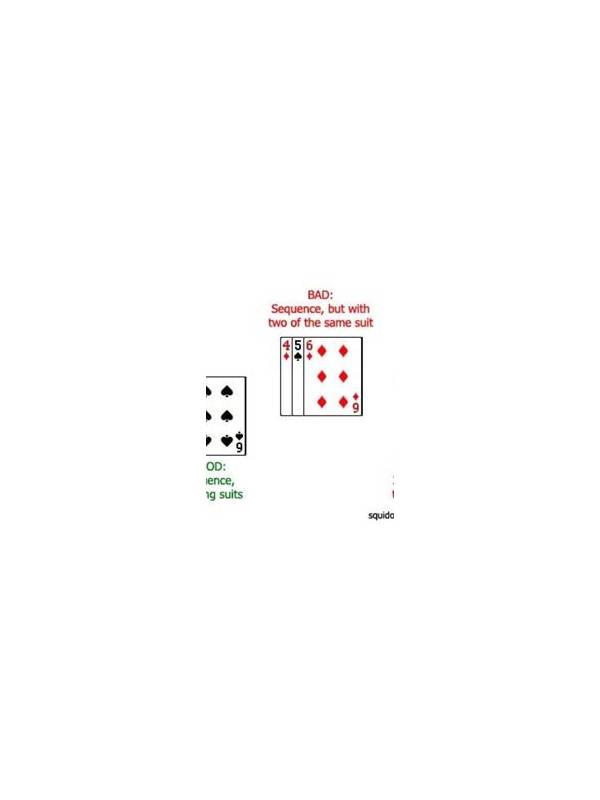
Give one positive example using simple labels. For a sequence, identify the suit and show consecutive ranks. For a set, identify the shared rank and the permitted suit differences. Then give one near-miss example and state precisely why it fails. Avoid examples that rely on hidden information or unusual edge cases during the first explanation.
Teach the turn cycle separately: draw, organize, discard, and wait. Let the learner repeat the cycle in a practice hand before adding strategy. Encourage questions about the rule rather than judging a mistake. A calm explanation improves memory and helps the player notice their own uncertainty.
Finally, explain the declaration check. Count every card, verify required groups, and review joker use. Make clear that a tidy visual arrangement is not proof of legality. If the platform offers a preview, describe what it checks and what it does not check. Never promise that a software prompt replaces reading the rules.
A good teacher also sets healthy boundaries. Practice without pressure, use only amounts appropriate to the learner’s limits, and stop if confusion or frustration rises. The aim is accurate understanding and enjoyable play, not forcing a new player to continue. Keep the lesson short, then revisit one rule at a time as questions arise.
Related Post

Rummy Comparison: Short Sequences Versus Long Sequences
Short and long sequences offer different kinds of flexibility, so compare completion speed with the [...]
Rummy Tips: Use a Time Budget for Each Decision
A flexible time budget keeps rummy analysis focused without turning the game into a race. [...]