Rummy Practice: Rebuild a Hand Using Only Three Draws
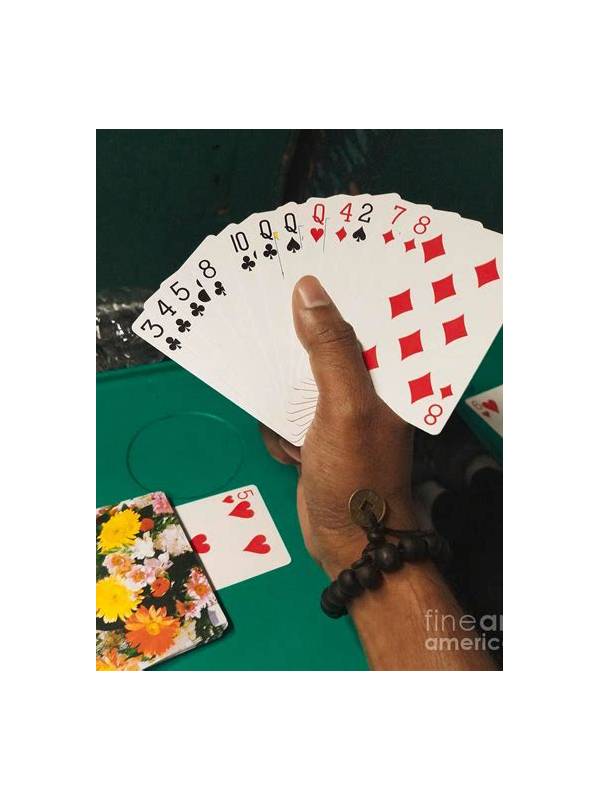
You can practice hand planning without a live table. Take a random collection of cards or use a completed deal, then remove information about what happened next. Give yourself three imaginary draws. The objective is not to predict the winning hand; it is to create a credible improvement plan and explain each discard.
Sort the hand and mark completed groups, pairs, near sequences, and isolated cards. Count points tied up in cards that currently have no job. Then list two candidate shapes. Candidate A should prioritize the strongest existing group. Candidate B should prioritize flexibility or a lower-risk way to reduce unmatched points. Writing both prevents the first attractive pair from becoming unquestioned.
For draw one, imagine a helpful card and name the discard it replaces. For draw two, imagine a useful but imperfect card. Recalculate rather than following the original plan automatically. For draw three, imagine receiving nothing useful. Decide which cards you release to limit damage. This sequence teaches planning for progress and disappointment.
After each imagined draw, record unresolved needs. A need is a specific improvement still required, such as a missing rank for a sequence or a matching rank for a set. Do not count every theoretical arrangement. Count only plans you would realistically keep. A hand with fewer needs is not always superior, but the comparison gives intuition something concrete to inspect.
Ask whether each discard was evidence-based. Did you release a high singleton because it had no connections, or because it was visually inconvenient? Did you break a pair to chase a narrow gap? Did you keep a card merely because it could be used somewhere? Honest answers reveal habits that are hard to notice during timed play.
Repeat with reordered cards and a different three-draw limit. You can ask a friend to propose a draw and challenge your assumptions. The exercise becomes useful when you explain trade-offs, not when you discover one perfect line. Short, repeatable practice builds quick reassessment while leaving the actual table and its rules in control. +To increase difficulty, restrict yourself to one sentence for each imagined decision. This forces you to state the main evidence and the cost of the discard. Then repeat the exercise with a fresh random hand. Improvement appears when your explanations become shorter and more specific, not when every practice hand reaches a perfect arrangement.
Related Post

Rummy Strategy: Give Every Loose Card a Deadline
A personal deadline keeps an attractive but unsupported card from occupying your hand indefinitely. [...]
Rummy Endgame Signals: Know When to Simplify Your Hand
Use a short endgame checklist to simplify a rummy hand when the table begins to [...]