Rummy Comparison: Keeping a Pair Versus Chasing a Sequence
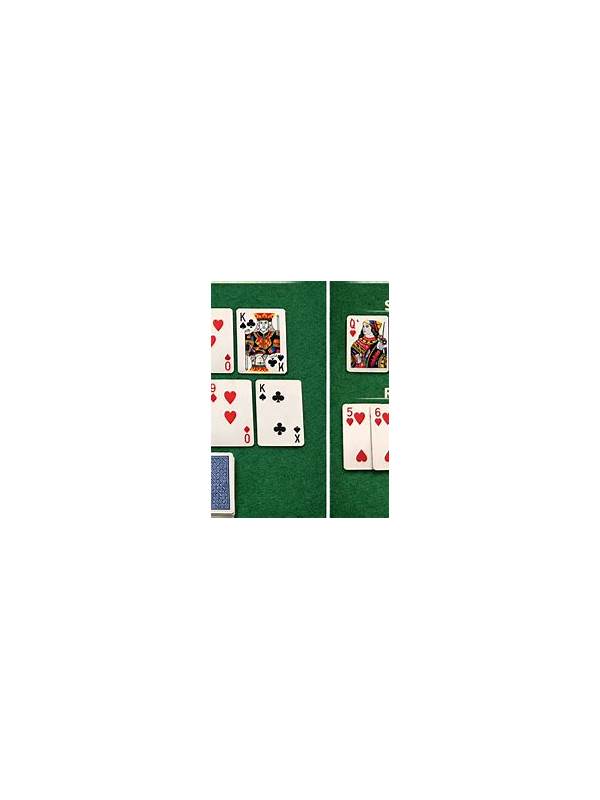
A pair and a near-sequence can both look promising, but they ask for different kinds of support. A pair usually needs a matching rank, while a sequence may accept one of several neighboring cards. Comparing the routes explicitly helps avoid attachment to whichever group looks prettier.
The case for the pair
A pair can be efficient when the rank has multiple unseen copies and the surrounding hand is already organized. It may also be useful when the pair’s cards are low value and therefore inexpensive to hold. If a third matching card appears, the group can become stable quickly.
The weakness is specificity. A pair often has fewer exact improvements than a connected sequence. If the needed rank has been discarded or the round is late, its expected value falls. A pair that consumes two otherwise flexible cards can also narrow the rest of your hand.
The case for the sequence
A connected sequence offers direction and often has several possible extensions. An open-ended connection can accept cards on either side, while an inside gap may accept only one rank. Sequences may also be strategically important under variants that require a particular kind of group, so rule knowledge matters.
The weakness is that a near-sequence can become a long-running project. If it requires two exact cards, it may be less practical than a simple pair. Also check whether preserving it forces you to keep a high card that would be costly at the end.
Compare flexibility, cost, and time
Use three questions. How many plausible cards improve the route? What is the point cost while you wait? How many turns can you reasonably spend before needing a fallback? The answer may change after every draw or visible discard.
A useful compromise is to keep the route with more than one future job while setting a review point for the other. You do not have to choose permanently on the current turn. You only need a clear condition for switching.
Make the decision whole-hand based
Never compare the pair and sequence alone. Inspect what remains after each route is retained. One choice may leave three clean cards; the other may leave a collection of isolated liabilities. The stronger route is the one that improves the complete hand, not the one that wins a small comparison.
There is no universal winner. Pair routes reward patience when support is available; sequence routes reward flexibility when connectors are plentiful. A disciplined player measures both against the hand’s structure and the round’s clock.
Related Post

Rummy Safety: Verify a Payment Notice Independently
Independent verification helps players avoid acting on convincing but fraudulent payment messages. [...]
Rummy Guide: Make Table Etiquette Part of Your Strategy
Clear table etiquette keeps rummy decisions fair, calm, and easier to evaluate. [...]