Rummy Comparison: Short Hands and Long Hands Demand Different Plans
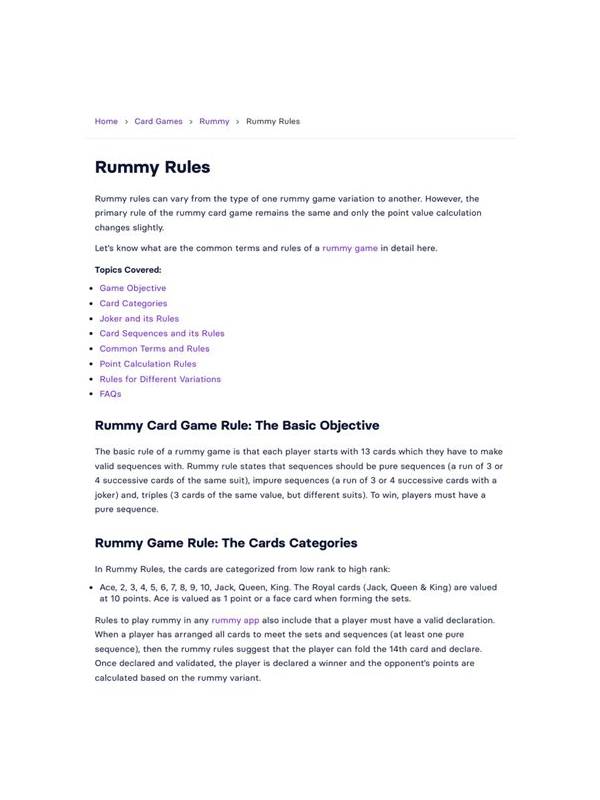
Short and long rummy hands can use the same rules while rewarding different habits. The main difference is how much time you have to improve an imperfect arrangement. Understanding that difference helps you avoid carrying a long-hand strategy into a fast format.
In a short hand, early structure matters greatly. A high unconnected card can remain dangerous because there may be only a few turns to repair it. Prefer visible connections and avoid building several narrow plans at once. A simple group with a realistic improvement may be better than a clever arrangement that requires an exact card.
Longer hands offer more room for reassessment. You can sometimes hold a flexible middle card while observing new discards, especially if it connects with multiple possibilities. However, extra time is not permission to keep everything. A weak card that survives several turns without improvement is still using space and may become harder to release later.
The discard pile also behaves differently. In a short hand, information may be limited because the sequence ends quickly. In a longer hand, repeated discards can reveal patterns about what others are not collecting. Treat those patterns as clues, not proof. Players can change plans, and visible information is never complete.
Your review process should match the format. For short hands, ask whether each turn reduces immediate penalty and improves a valid group. For long hands, ask whether the hand is becoming more flexible and whether a current plan has enough evidence to continue. Both questions are useful, but their emphasis changes.
Finally, match your session budget to the format. Fast hands can create a strong urge to start another immediately after a loss. Longer hands can create the opposite urge to continue because so much time has already been invested. Decide your limits before playing and take a break when attention drops.
Short hands reward clean priorities; long hands reward patient updates. Neither format is automatically easier. The better choice is the one whose pace and risk fit your experience, focus, and pre-set boundaries. When comparing formats, test them in free or low-pressure practice first. Notice whether the turn speed leaves time to sort, whether scoring is easy to follow, and whether the hand length encourages you to continue after your planned stop. These practical observations are more useful than choosing a format because it sounds more advanced. Comfort with the rules should come before increasing complexity or stakes.
Related Post

Rummy Strategy: Give Each Incomplete Group a Deadline
A deadline keeps an attractive but stagnant group from consuming the whole hand and blocking [...]
Rummy Table Safety: Avoid Playing While Distracted
A quick distraction check helps players protect attention, privacy, and session boundaries while using an [...]